

During the Responsible Travel Meets Green Design Speaker Series at Bangkok Climate Action Week 2025, Marisa Sukosol Nunbhakdi, Vice President of Sukosol Hotels and former President of the Thai Hotels Association, delivered a clear message: Thailand’s hospitality sector must move beyond “green” certifications towards regenerative tourism—a model that not only sustains, but actively restores ecosystems and delivers lasting value to communities.

Her keynote reflects a global paradigm shift. Travelers now expect more than sustainability:
– According to Booking.com’s Sustainable Travel Report 2024, 74% of global travelers want their choices to have a positive impact on local communities, and 69% aspire to “leave places better than they found them.”
– A WTTC 2023 report highlights that 42% of luxury travelers prioritize destinations and hotels with visible sustainability and regeneration commitments.
Comparisons across regions also show the competitive urgency:
- Singapore’s Green Plan 2030 is positioning it as the world’s greenest city.
- Turkey will make hotel certification mandatory by 2030.
- In China, more than 80% of travelers already consider responsible travel important.
Thailand is making progress, but as Marisa highlighted, true regeneration goes further: it is about closing income gaps, spreading opportunities to secondary cities, and ensuring communities—not just destinations—thrive.
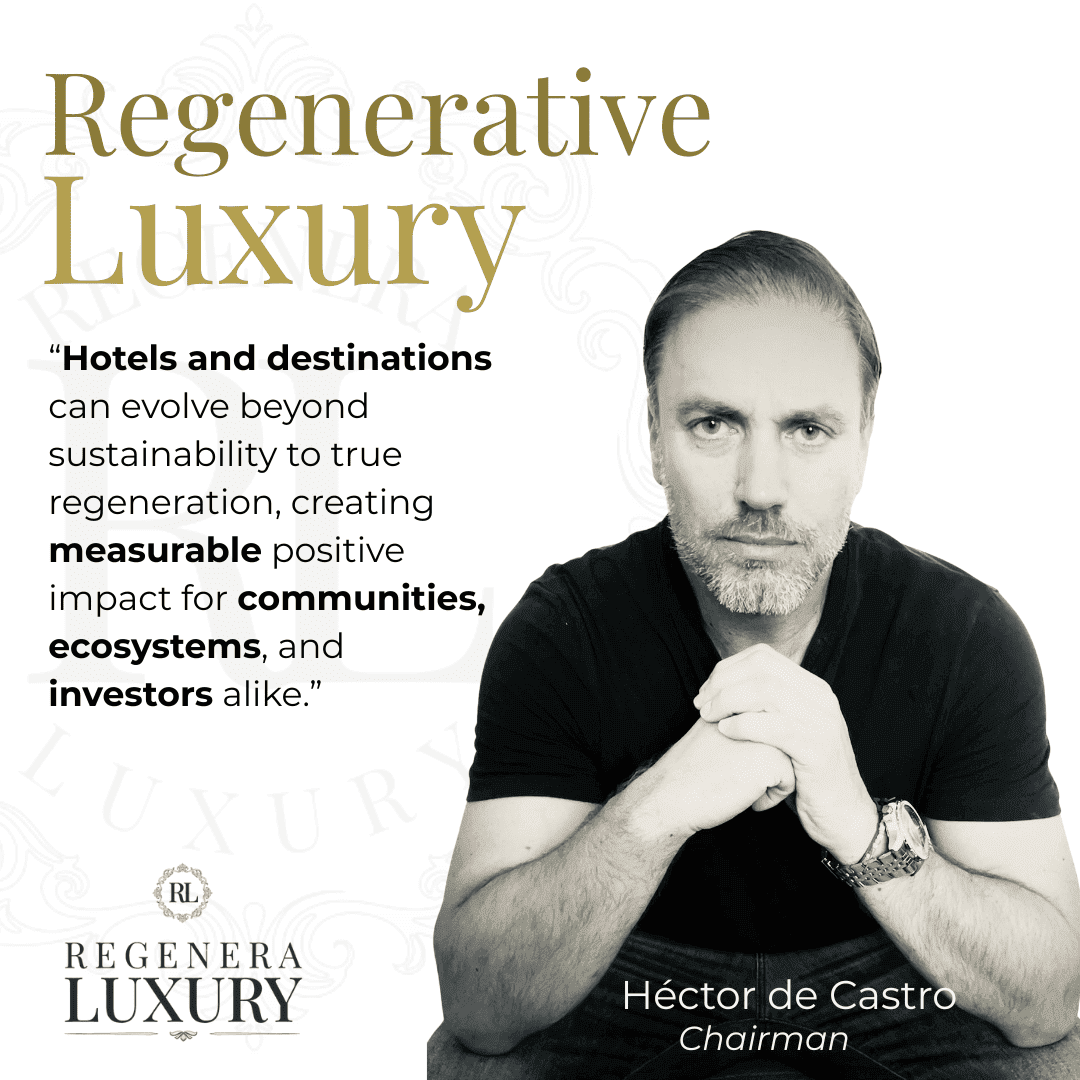
As Héctor de Castro, President of Regenera Luxury, reminds us:
This aligns with our core values:
– Beyond Sustainability – not just minimizing harm, but actively restoring ecosystems.
– Community Empowerment – ensuring equitable distribution of tourism’s benefits.
– Measurable Impact – aligning hotels with the UN SDGs to ensure accountability and transformation.
The road is indeed long, as Marisa noted, but collaboration is key. Regenerative tourism is not only an ethical imperative—it is becoming a business necessity for competitiveness in global hospitality.
The message is clear: Green is no longer enough. The future of tourism is regenerative.
And we can measure it.