
What Regenerative Travel Truly Means: From Intention to Verified Impact
Regenerative travel is emerging as one of the defining ideas shaping the future of tourism. Yet to understand its true...
Read more → What Is Regenerative Luxury — and Why It Redefines the Future of Hospitality
A New Era for Luxury
After more than twenty years traveling across Southeast Asia — staying in and studying visionary resorts such as Alila, Six Senses, Soneva, or Banyan Tree — I realized something profound.
The way they feel, create, and communicate luxury was deeply different from what I had witnessed across Europe, the Middle East, or the Caribbean. In Asia, the core of luxury wasn’t opulence or accumulation — it was about presence. It was slower, quieter, and far more connected to life itself.
I began to dig deeper into the roots of this difference — into the spiritual, ecological, and cultural DNA that shaped it. I started my PhD research and, through that exploration, I understood something that has since redefined my life’s work:
Luxury, like the Earth, was asking to be reborn to make use of its power for good.
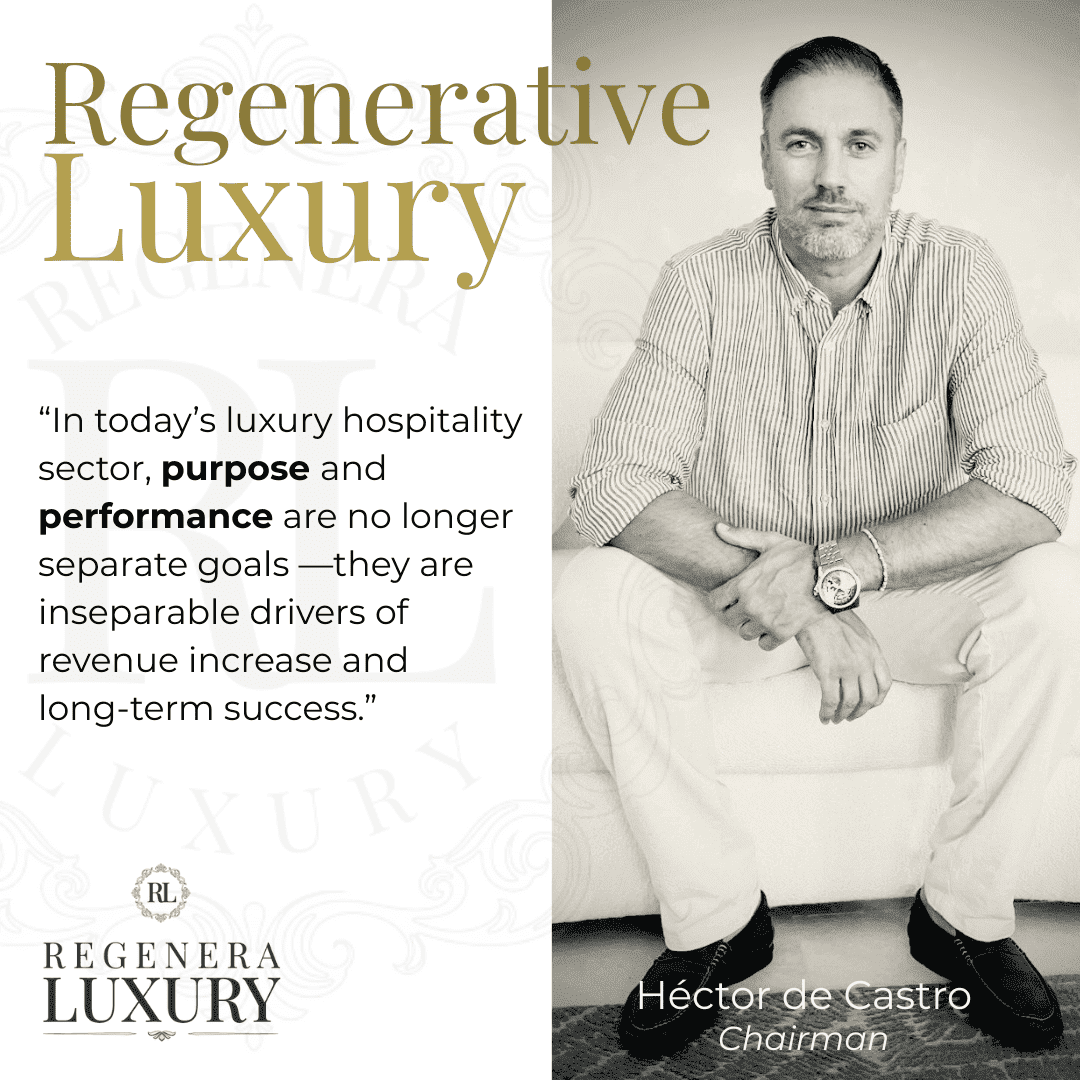
For decades, our industry has been mastering the art of creating beauty. But beauty, if detached from life, becomes sterile. We designed sanctuaries that soothe the senses but often forget to heal the ecosystems and communities that sustain them.
Today, the new frontier of luxury is not perfection — it is regeneration.
Regenerative Luxury goes beyond sustainability. It is not about doing less harm; it is about actively restoring, revitalizing, and re-enchanting the natural and human systems we touch. It invites us to imagine a world where a hotel doesn’t just protect its environment but enhances it, where every guest leaves not only renewed but transformed, and where every experience generates measurable positive impact.
For decades, specially in Europe, our industry has pursued beauty through perfection — flawless design, precision service, rare exclusivity. But the world has changed. Beauty without life is no longer beautiful. A resort that dazzles yet depletes is no longer aspirational.
The true luxury of our time is not excess — it is regeneration.
Regenerative Luxury is not a marketing term; it is a philosophy of renewal, a science of vitality, and a profound shift in how we define value itself.
The emerging paradigm is Regenerative Luxury: a form of luxury that not only minimizes harm but actively restores ecosystems, cultures, and human wellbeing. It’s not a trend — it’s a transformation of consciousness.
In the regenerative era, luxury is no longer about owning more. It’s about belonging to something greater — to the cycles of nature, to the wisdom of place, and to the legacy of care we leave behind.

–
For years, the hospitality sector has spoken the language of sustainability — carbon reduction, efficiency, certifications. These are essential foundations, but they are not enough. Sustainability seeks to “do less harm,” to sustain the current state of things.
Regeneration seeks something more ambitious: to create the conditions for life to thrive again.
The difference is not semantic; it’s systemic.
Regenerative Luxury reframes value from scarcity to abundance, from extraction to reciprocity, from perfection to co-evolution.
–
Regenerative Luxury is inspired by living systems thinking — the understanding that hotels, guests, and destinations are part of a single, interdependent web of life. This approach draws from disciplines such as biomimicry, ecological economics, bioregional design, and wellbeing science.
It integrates frameworks like:
These frameworks help define the science of regeneration — but the art lies in how we bring them to life through hospitality.
–
Regenerative Luxury is built upon five interconnected pillars:
Under this vision, luxury becomes a catalyst of healing, not a symbol of privilege.
–
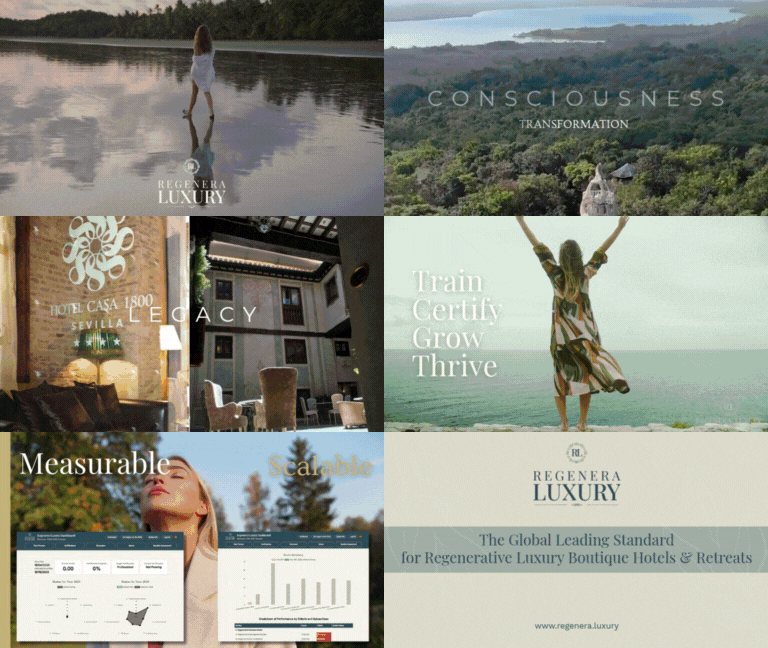
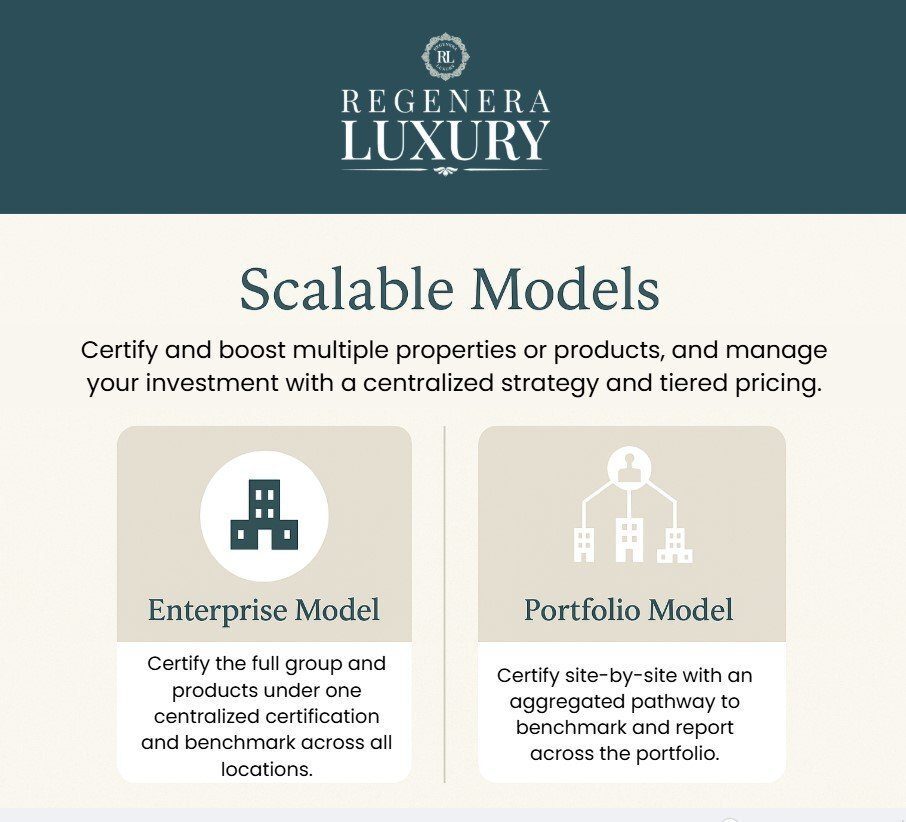
At Regenera Luxury, we believe regeneration must be measurable, verifiable, and profitable. Our certification framework — recognized internationally — evaluates eight comprehensive sections covering environment, culture, governance, innovation, and community wellbeing, each linked to specific SDGs.
The goal is not only to certify excellence but to guide transformation — helping hotels evolve from sustainability to full regenerative impact through measurable actions and continuous improvement.

–
Traditional sustainability metrics — CO₂ saved, water reduced, waste recycled — tell only part of the story. Regeneration demands more: it measures how life itself improves through our presence.
We therefore evaluate performance across four living capitals. Here you can see a short example selected from more than 100 KPIs.
| Capital | Regenerative Definition | Example Indicators |
|---|---|---|
| Natural Capital | The ability of local ecosystems to regenerate and sustain biodiversity, soil, and water. | – Hectares restored (ha/year) |
This framework is grounded in the Natural Capital Protocol and the System of Environmental-Economic Accounting (SEEA) endorsed by the United Nations.
Regenerative metrics track living flows, not static states. They measure net positive outcomes over time — how ecosystems and communities evolve thanks to the project’s presence.
Example:
A luxury retreat certified under Regenera Luxury initiates a 3-hectare mangrove restoration:
This is regeneration quantified: measurable vitality.
–
Each regenerative indicator is mapped to the UN Sustainable Development Goals, ensuring global alignment:
| SDG | Regenerative Indicator |
|---|---|
| SDG 6 – Clean Water | % of greywater re-infiltrated, liters reused per guest-night |
| SDG 8 – Decent Work | Local employment ratio, wage equity, % of revenue reinvested locally |
| SDG 12 – Responsible Consumption | Regenerative food sourcing %, waste composted, materials recovered |
| SDG 13 – Climate Action | CO₂e avoided/sequestered, renewable energy share |
| SDG 14/15 – Life Below Water / On Land | Biodiversity index, area restored, indicator species |
| SDG 17 – Partnerships | Community-science collaborations, co-funded projects |
This mapping integrates regenerative luxury within ESG and impact investment frameworks, increasing transparency and capital trust.
In luxury, beauty without evidence becomes superficial.
That is why regeneration requires scientific verification and third-party audits.
Our process includes:
At Regenera Luxury, transparency is elegance.

Regenerative hospitality does not only restore landscapes — it restores people.
Guests are not passive consumers; they are participants in transformation.
We therefore measure:
This emotional and cognitive impact is what we call Return on Impact — the true luxury of meaning.
–
Regenerative data must inform strategic and financial decisions.
At Regenera Luxury, we promote the model of Impact Return on Experience (IROE) — linking economic performance with ecological and social vitality.
Example:
“Every night spent in this villa restores 10 m² of tropical forest and funds one day of education for a local child.”
This approach transforms impact into a value proposition.
According to the Global Impact Investing Network (GIIN), the impact investment market surpassed USD 1.5 trillion in 2024, with tourism emerging as one of the fastest-growing sectors.
Hotels that demonstrate measurable, audited impact will be at the forefront of this new capital flow.
–
The next evolution in regenerative luxury will integrate real-time data intelligence:
Soon, travelers will be able to see on their smartphone how their stay contributed to biodiversity recovery, carbon sequestration, or local education.
When data becomes alive, transparency becomes art.
–
Regenerative Luxury is not a niche. It is the new DNA of the luxury hospitality of tomorrow — a model that measures success not by how exclusive an experience is, but by how inclusive its impact becomes.
At REGENERA LUXURY, we believe that the future of luxury is written not in marble, but in health, inner balance, nature restored, local artisans empowered, flourishing culture and growing economies.
That is the legacy worth leaving.
Regenerative travel is emerging as one of the defining ideas shaping the future of tourism. Yet to understand its true...
Read more →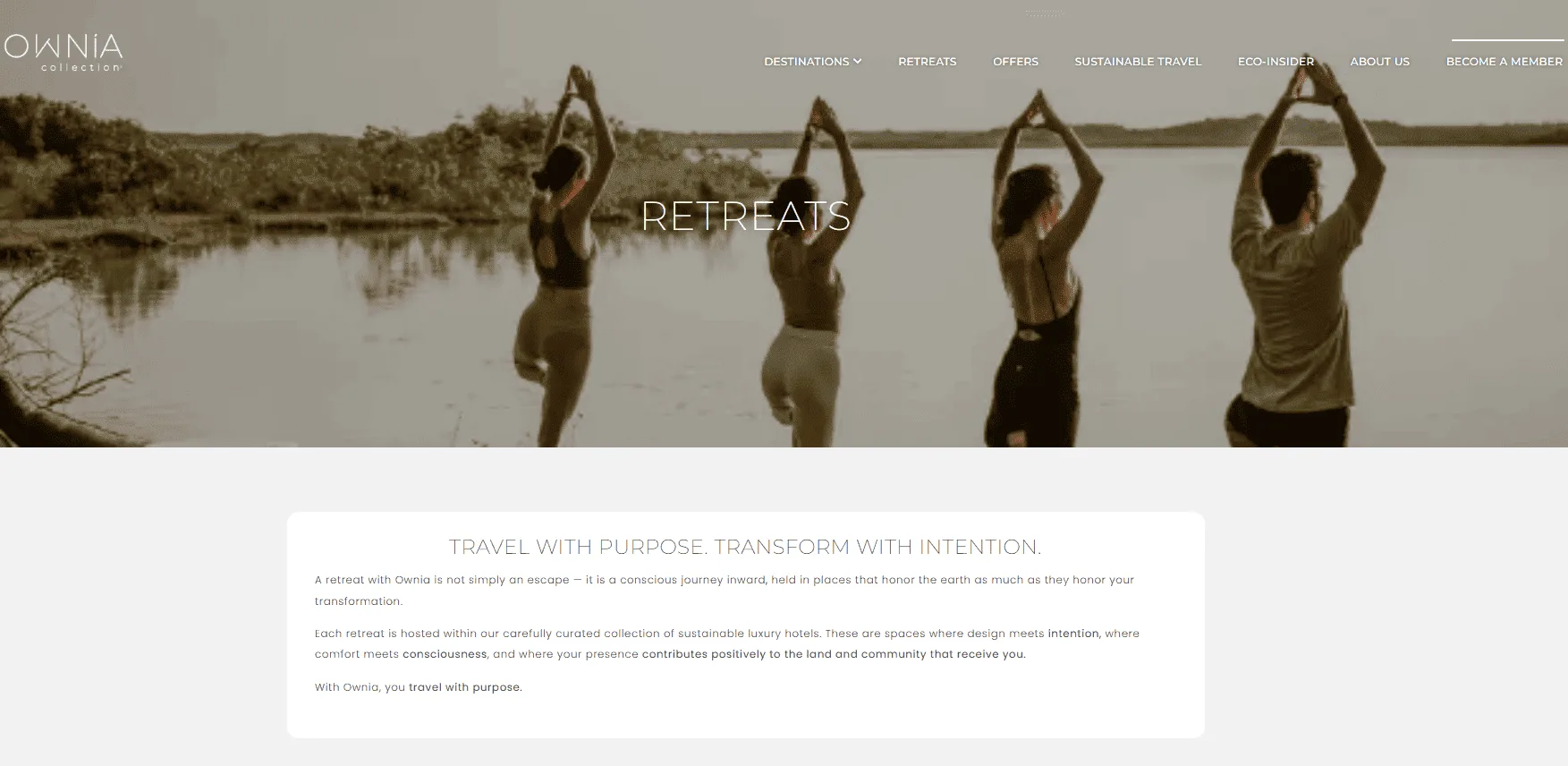
Strategic Alliance: Regenera Luxury x Ownia Collection, Regenera Luxury is proud to announce a strategic partnership with Ownia Collection, a...
Read more →
Europe’s sustainability framework is reshaping the future of hospitality. In 2026, luxury and boutique hotels can no longer rely on...
Read more →