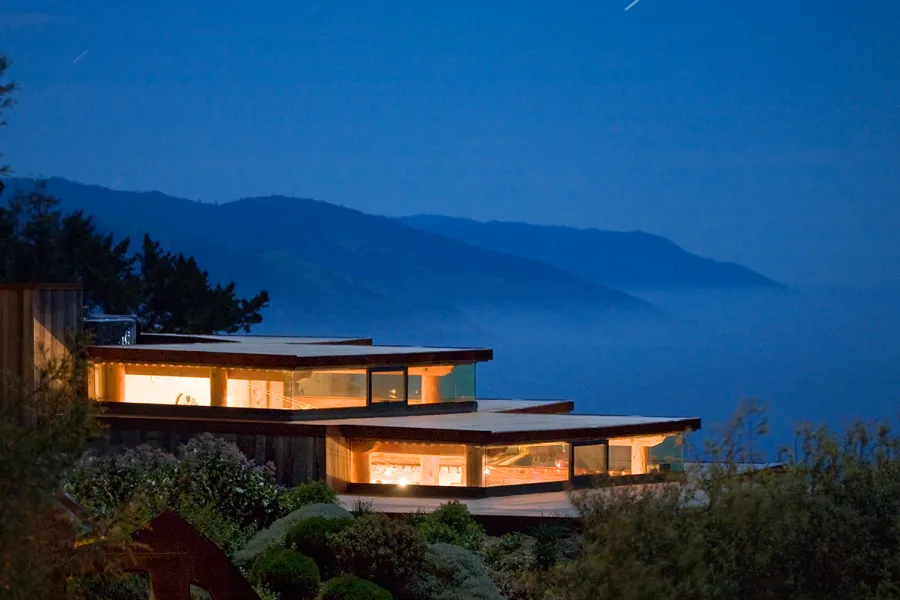

Luxury hospitality is undergoing a profound transformation, moving beyond sustainability toward regeneration—a philosophy that not only preserves natural ecosystems but actively enhances them. Saudi Arabia’s Government is making big decisions to position itself as a global leader in regenerative luxury tourism. These projects set a new benchmark for high-end hospitality while aligning with the criteria of Regenera Luxury, the World’s first certification for regenerative luxury hotels and retreats.
The figures are compelling. In 2023, the luxury tourism market in the Middle East was valued at 53 billion USD and is expected to expand at an annual growth rate of 5.5% until 2030. Euromonitor International reports that high-net-worth travelers currently represent 36% of global travel spending, with the Middle East leading as their top destination. Additionally, a 2023 survey by Bain & Company found that more than two-thirds of leisure travelers to the MENA region prioritize sustainability, and 57% are willing to recommend destinations that embrace regenerative practices.
It is essential that, in light of the Saudi Arabian government’s policies promoting regenerative tourism, there are certifications and accredited audits that provide authentic support beyond marketing strategies and avoid greenwashing. These certifications align projects genuinely with sustainability principles and eliminate the presentation of a facade. In this context, Regenera Luxury stands out as the world’s first certification for regenerative luxury hotels and retreats. Its criteria and values focus on the true regeneration of ecosystems, cultural heritage, and communities.
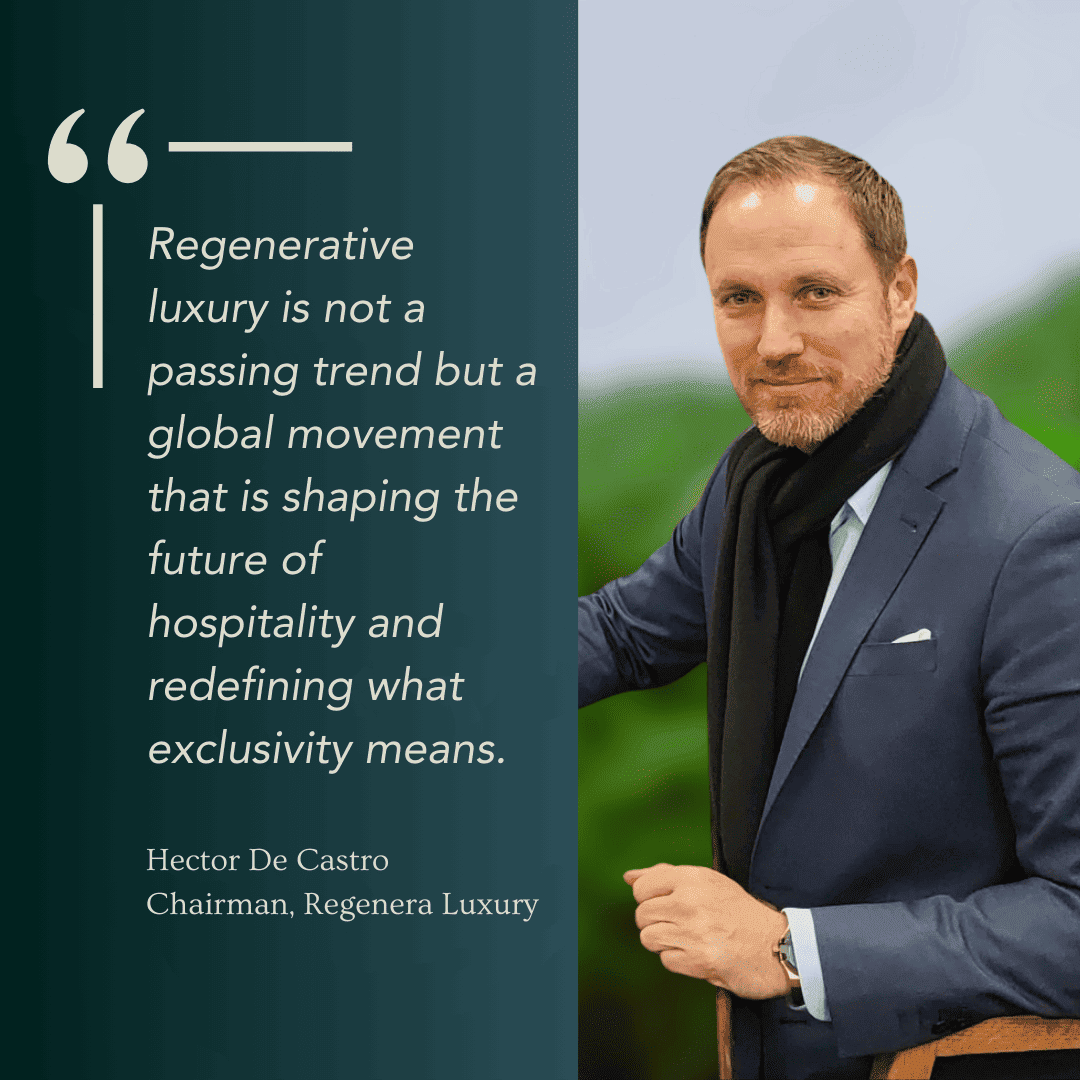
Héctor De Castro, Chairman of Regenera Luxury, emphasizes the significance of this shift: “Luxury tourism must not only be about exclusive experiences but about restoring the land, the cultural heritage, and empowering local communities. What we see in Saudi Arabia is part of a larger, worldwide movement that is shaping the future of luxury hospitality.”
Saudi’s Hotel Projects Immersed in Regenerative Luxury
The Red Sea Project stretches across Saudi Arabia’s northwest coast. Red Sea Global spearheads an innovative regenerative tourism development that operates exclusively on renewable energy and actively enhances biodiversity. This initiative represents the transition from sustainability to full ecological and cultural regeneration.
Regenerative Tourism: Redefining Environmental Strategy
At the heart of Saudi Arabia’s environmental strategy is regenerative tourism. Unlike sustainable tourism, which aims to minimize harm, regenerative tourism strives to improve destinations through conservation, community engagement, and science-led initiatives. This includes implementing eco-friendly infrastructure, protecting biodiversity, and involving local communities in conservation efforts to ensure long-term environmental and economic benefits.
“The coral reef is the fourth largest in the world. It is very healthy, and we are committed to protecting the health of the reef,” says Tracey Lanza, Group Head of Global Branding for The Red Sea Development Company. “But this doesn’t just mean maintaining the health of the reef—we are committed to enhancing biodiversity.”

Tracey Lanza, Group Head of Global Branding for The Red Sea Development Company.
Desert Rock Resort: A Model of Sustainable Luxury
Desert Rock Resort: Pioneering Sustainable Luxury in The Red Sea Vision
By 2030, The Red Sea will feature 50 hotels, while limiting visitor numbers to one million annually to ensure minimal environmental impact. As part of this vision, Red Sea Global has developed the Desert Rock Resort, an ultra-luxury retreat designed to blend seamlessly into its natural surroundings. Built into the rock formations, the resort utilizes passive design techniques to maximize natural light and reduce energy use.
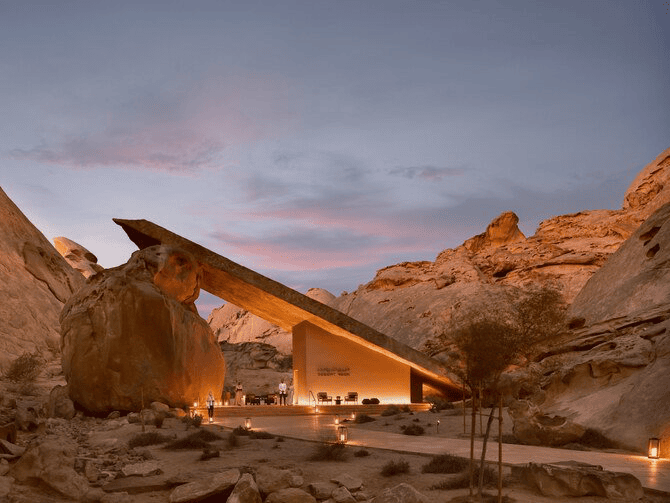
Desert Rock Resort
Before construction began at Desert Rock, Red Sea Global partnered with the King Abdullah University of Science and Technology to conduct the largest marine spatial planning study in Saudi Arabia’s history.
“This was the largest study of its kind ever undertaken in Saudi Arabia, and it provided crucial data to inform our master plan and minimize our impact on the delicate marine ecosystem,” says Raed Albasseet, Group Chief Environment and Sustainability Officer at Red Sea Global.
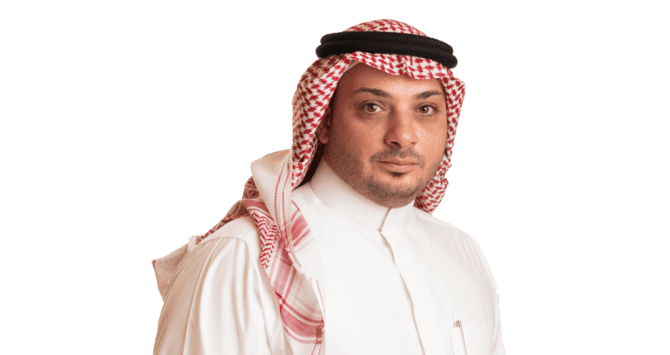
Mr. Raed Albasset
Shebara and Desert Rock, two flagship retreats within The Red Sea development, integrate advanced water-saving systems such as smart irrigation and closed-loop water retention.
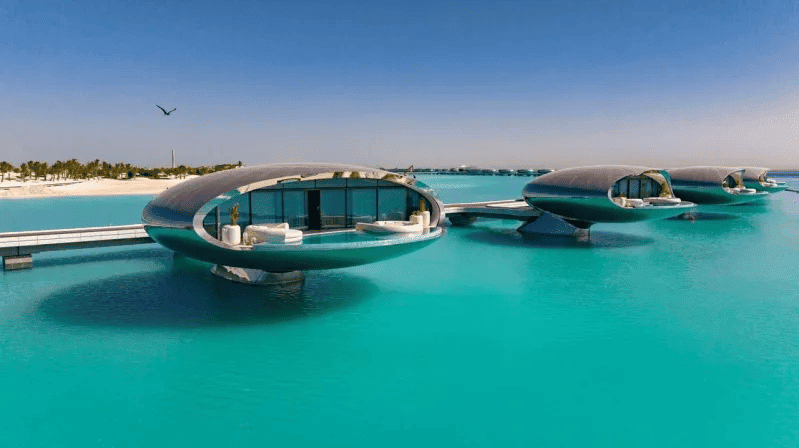
Shebara Resort, Saudi Arabia
“A key element of our water conservation efforts is the implementation of closed-loop systems,” Albasseet adds. “At Desert Rock, we have advanced water retention and distribution systems that capture rainwater. This captured rainwater is used to sustain the surrounding wadi, revitalizing the local ecosystem and minimizing reliance on external water sources.”
Barefoot Luxury: Partnerships for Regenerative Tourism
The Red Sea project embraces a philosophy of ‘barefoot luxury,’. It immerses guests in the land, beaches, desert, and marine environments while focusing strongly on regeneration. To achieve this, Red Sea Global has partnered with nine world-class luxury hotel brands. They are Edition Hotels, St Regis Hotels & Resorts, Fairmont Hotel & Resorts, Raffles Hotels & Resorts, SLS Hotels & Residences, Grand Hyatt, InterContinental Hotels & Resorts, Six Senses, and Jumeirah Hotels & Resorts. These partnerships reflect a growing alignment between luxury hospitality and regenerative tourism.
Expanding the Regenerative Luxury Footprint
Beyond The Red Sea Project, other visionary hospitality brands are redefining the luxury landscape in Saudi Arabia. Our Habitas, known for its innovative eco-luxury resorts, has brought its signature regenerative ethos to the kingdom. Designed with minimal impact construction and strong community engagement, Our Habitas properties integrate seamlessly with their environments. Which offers authentic cultural experiences while preserving local ecosystems.
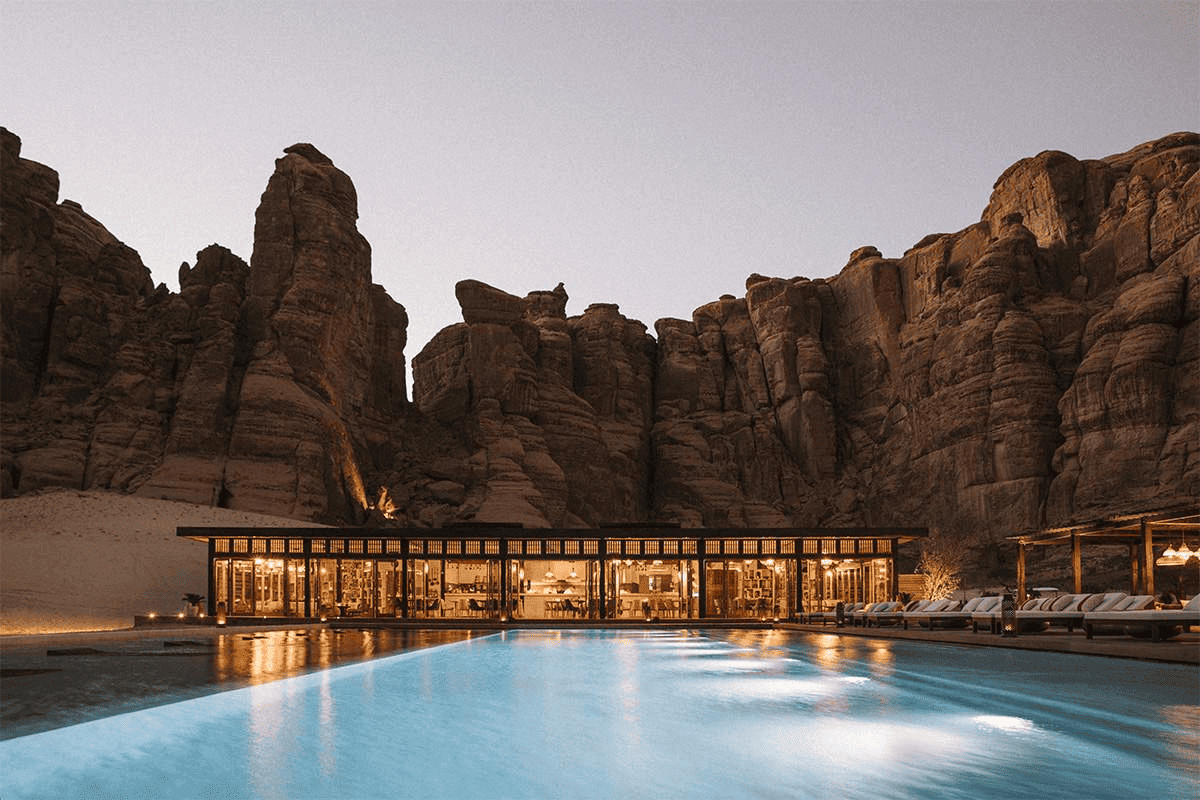
OUR HABITAS, Alula, Saudi Arabia
Azulik, another key player in regenerative luxury, is expanding into Saudi Arabia with a focus on art, nature, and indigenous knowledge. The brand, renowned for its organic, biomorphic architecture, aims to create spaces that exist in symbiosis with their surroundings. Azulik’s upcoming Saudi Arabian retreat will follow the same philosophy. It will employ local artisans and materials to enhance cultural heritage while minimizing environmental disruption.
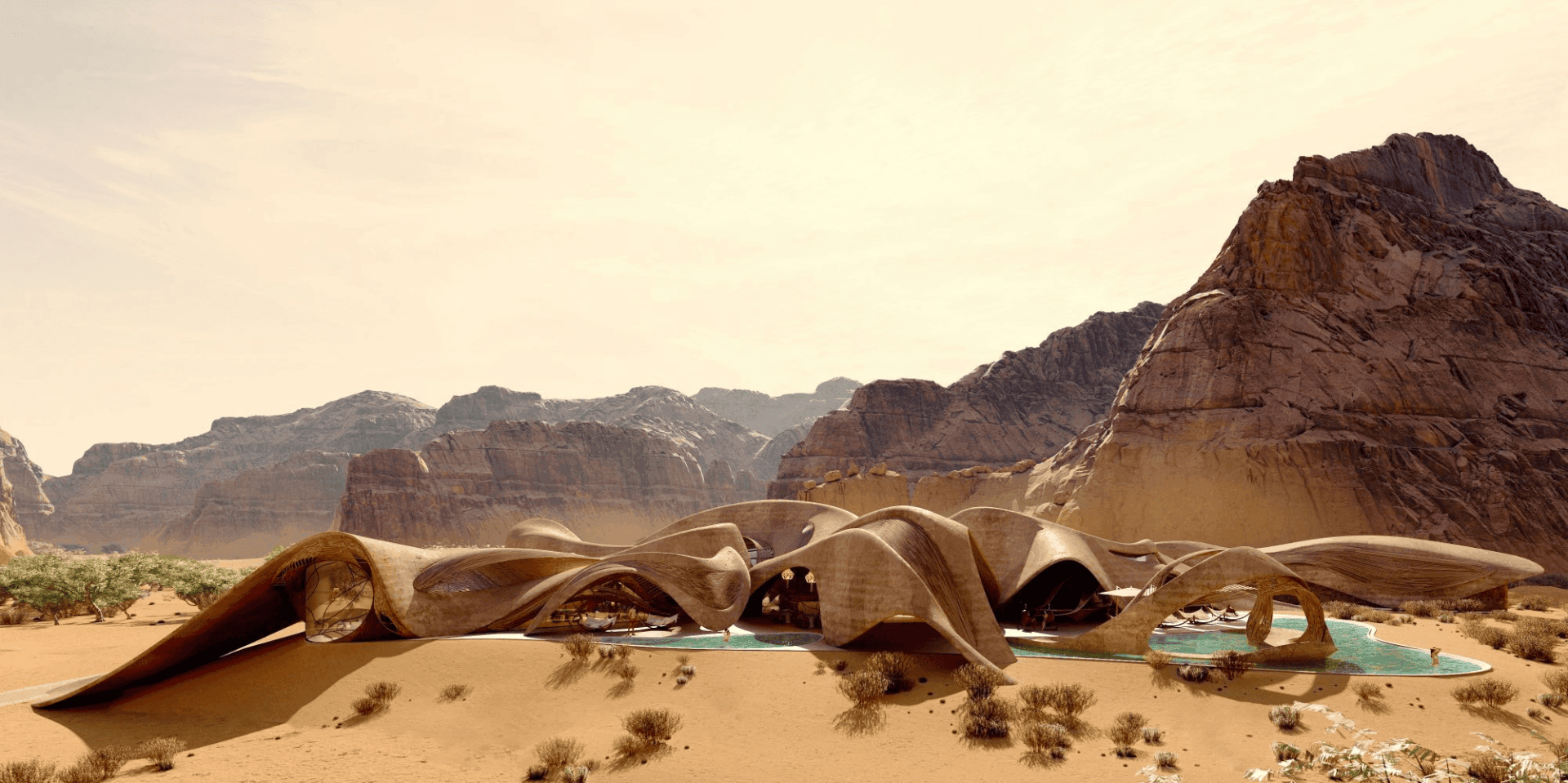
An ongoing project by Azulik. Opening in 2027
The Global Movement: Why Regenerative Luxury is the Key
The emergence of regenerative hospitality in Saudi Arabia reflects a larger global movement. High-net-worth travelers are increasingly seeking experiences that go beyond indulgence, prioritizing destinations that restore and enrich their surroundings. Regenera Luxury Certification is recognized as the foremost global standard for regenerative luxury hotels and retreats. It guarantees that hotels, retreats, and holistic centers adhere to strict criteria for environmental, social, and cultural regeneration. By aligning with Regenera Luxury, properties not only gain credibility but also attract the new wave of conscious luxury travelers.
Saudi Arabia didn’t confine this regenerative shift.
Only Saudi Arabia didn’t confine this regenerative shift. With Regenera Luxury Certification’s team in 14 countries and expanding its work across the globe, destinations worldwide are embracing a new model of tourism. It is one that not only sustains but actively rejuvenates both people and the planet.
In the future of hospitality luxury and regeneration are not just compatible but inseparable. As Saudi Arabia sets the stage for this transformation, Regenera Luxury Certification provides the framework for ensuring that regenerative tourism is not just a concept, but a measurable and impactful reality.
As Héctor De Castro puts it, “Regenerative luxury is not a passing trend but a global movement which is setting the future of hospitality and redefining what exclusivity means in hospitality.”