
The business case for regenerative luxury: what the data says
Regeneration is often framed as a cost. The evidence points the other way — verified, net-positive impact is becoming a driver of pricing power, demand and long-term asset value across luxury hospitality.
For a decade, sustainability sat in hospitality’s cost column — a compliance line, a CSR paragraph, a set of efficiencies. That framing is now out of date. As guests, investors and operators converge on a more demanding definition of value, the properties that can measure and prove their impact are pulling ahead commercially. The question for owners is no longer whether regeneration is worth doing, but how quickly they can make it verifiable.
The distinction matters. Regenerative luxury is not a greener shade of sustainability; it is hospitality that gives back more than it takes and can demonstrate it. Sustainability aims to do less harm. Regeneration aims to leave the ecosystem, community and culture measurably better — and to hold that claim up to independent audit. That difference is precisely what the market has begun to reward.
Demand has already moved
The clearest signal is coming from guests. Travel and tourism generated 9.1% of global GDP and 27 million new jobs in 2023 (FT Longitude), and the fastest-moving part of that demand is the search for genuine impact. In an FT Longitude survey of 5,000 heritage- and nature-focused travellers, 84% said they want to travel more sustainably over the next twelve months; a parallel Booking.com study found 53% are actively annoyed when a provider offers no sustainable option. A growing share now prefer brands that regenerate over those that merely sustain — and in the luxury tier, where discretionary spend is high and reputation is the product, that preference translates directly into rate resilience and repeat business.
Crucially, this is discerning demand. High-value travellers have learned to discount unverified marketing claims; what they respond to is proof. Independent, third-party certification converts an internal ambition into an external, defensible signal — the same role a Michelin star or a grand-cru classification plays in adjacent luxury categories.
Sources: FT Longitude — Visionary Realms: Regenerative Tourism (Royal Commission for AlUla), 2023–24; Booking.com Sustainable Travel Report; Islam et al., Jurnal Kepariwisataan, 2024; and the current Regenera Luxury ecosystem.
From badge to management system
The commercial case only holds if the claim is credible — which is why the how matters as much as the what. A logo on a website is easy to acquire and easy to dismiss. A graded, independently audited management system, built on hundreds of KPIs across twelve modules, is not. It gives an owner something a marketing campaign cannot: a live, improvable record of performance that stands up to scrutiny from guests, lenders and future buyers alike.
This is where Regenera Luxury departs from conventional labels. As set out in how we compare, the standard is not a one-off inspection but a continuous system — baseline, plan, evidence, audit, improve. Impact stops being an annual report and becomes an operating discipline, with the data trail investors increasingly ask for. Peer-reviewed research on regenerative tourism reaches the same conclusion from the academic side: without robust metrics, it is impossible to separate genuinely regenerative initiatives from those that simply claim sustainability (Islam et al., Jurnal Kepariwisataan, 2024).
Where the value shows up
Owners tend to see the return in four places. Rate and occupancy: a verified regenerative position supports premium pricing and softens seasonality by attracting purpose-led demand year-round. Cost: the same measurement discipline that proves impact also surfaces energy, water and waste efficiencies. Talent: mission-driven properties recruit and retain more easily in a tight labour market. Asset value: as ESG-linked capital becomes standard in hospitality transactions, an audited impact record is fast becoming a diligence item rather than a differentiator.
None of this requires trading service for virtue. The most compelling properties in the RL Collection are exceptional hotels first — regeneration deepens the guest experience rather than diluting it. That is the essence of the argument: done properly, regeneration is not a constraint on luxury but its next expression.
Proof, not theory: the ecosystem in practice
The argument stops being abstract the moment you look at the properties already inside the standard. They span heritage city landmarks, alpine design icons and Asian wellness sanctuaries — and each treats regeneration as a driver of distinction, not a compliance exercise.
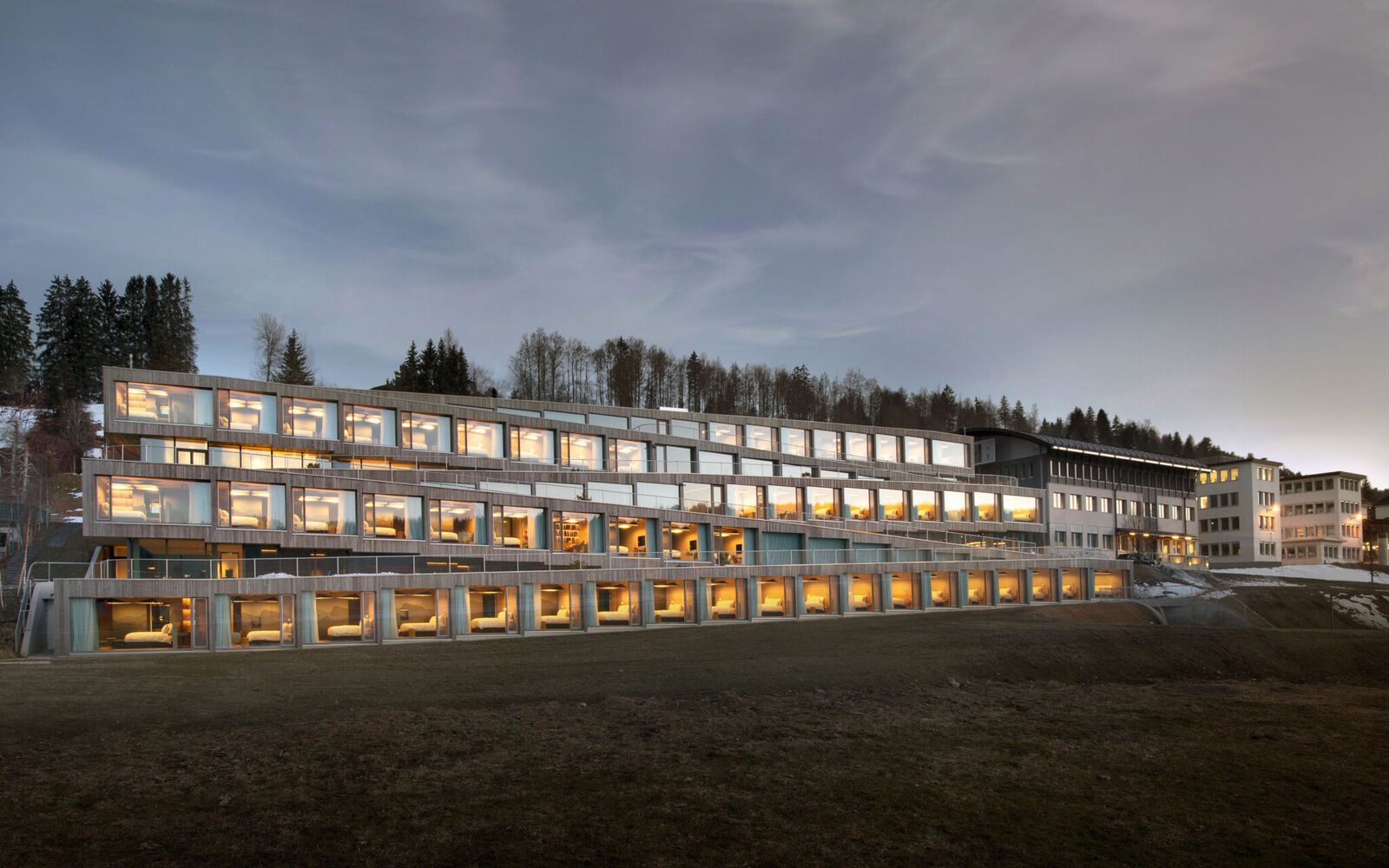
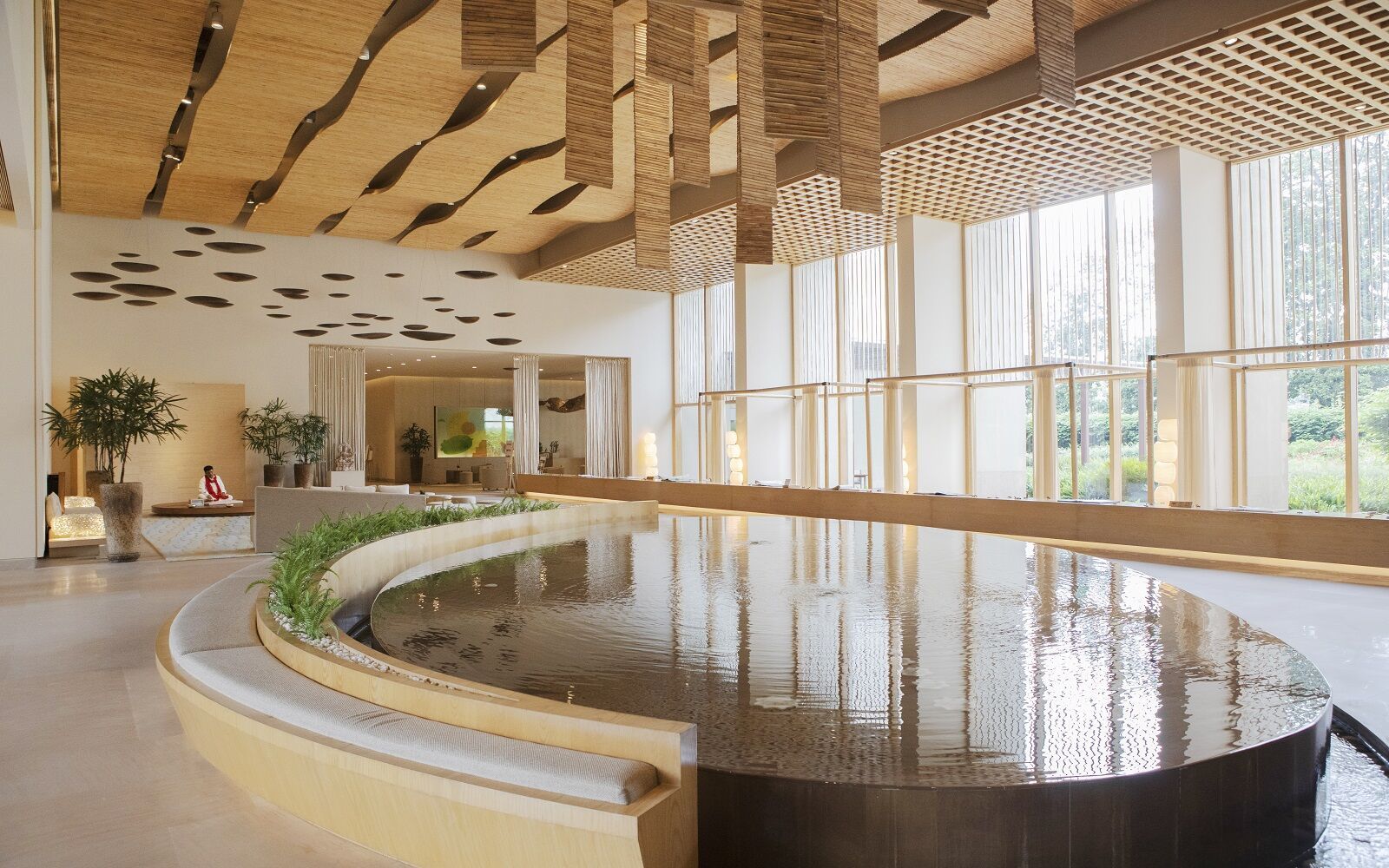
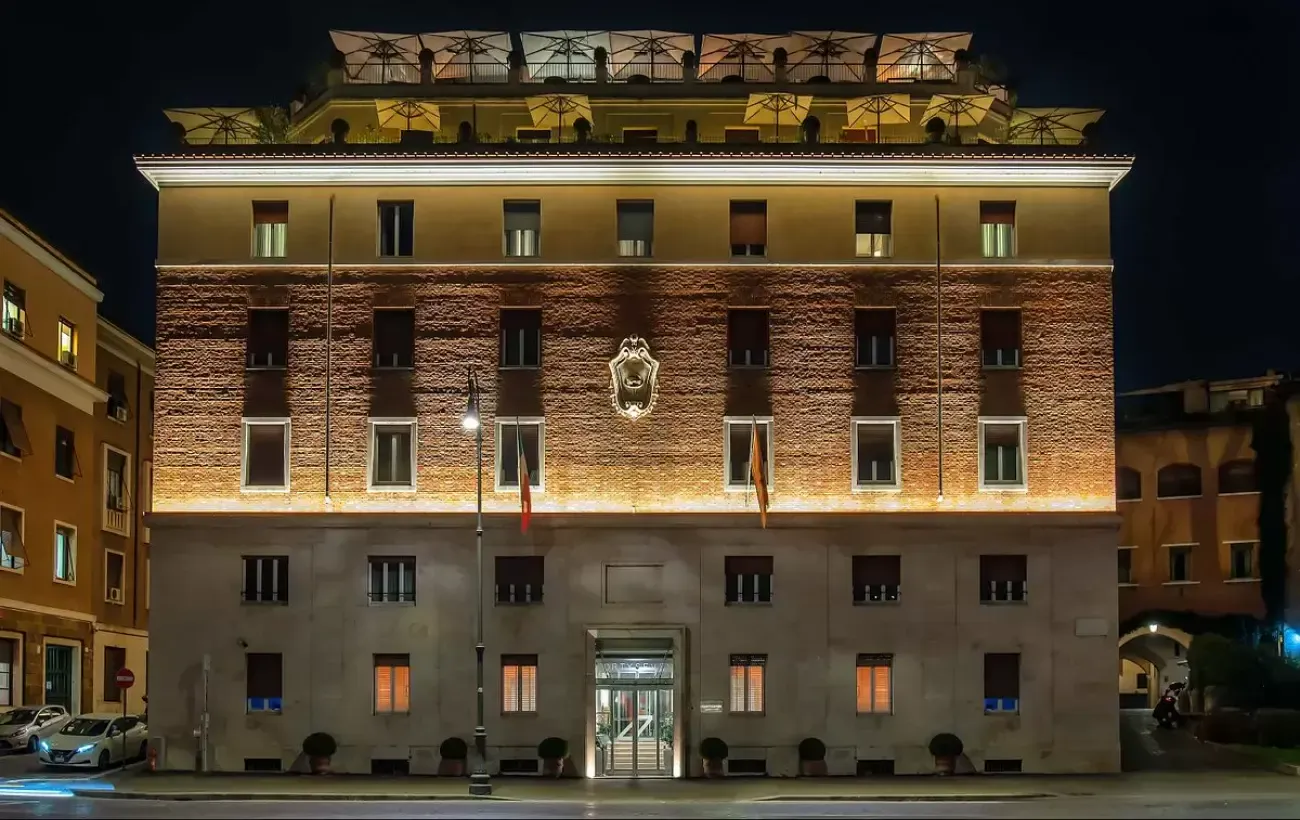
In the Vallée de Joux, the Hôtel des Horlogers — an architectural landmark folded into the Swiss Jura and a nominee at the Regenera Luxury Awards — shows how a design-led property can make a fragile landscape part of its very identity. On Koh Samui, Kamalaya, also nominated to the Regenera Luxury Awards 2026, demonstrates that holistic wellness and measurable ecological care reinforce one another rather than compete. And in the heart of Rome, Hotel 47 is completing its Regenera Luxury certification while regenerating beyond its own walls — its “Forty Seven” olive-grove project restoring productive land as a living extension of the hotel’s story.
These properties sit in the same conversation as the names that have come to define modern luxury hospitality — the Aman philosophy of place and restraint, or the environmental ethos of Six Senses. What independent certification adds is proof: not a philosophy asserted in a brochure, but performance measured across twelve modules and verified by a third party. In a category where reputation is the product, that difference is quickly becoming the line between a claim and an asset.

A pragmatic first step
For most owners the barrier is not conviction but a starting point. The fastest way to size the opportunity for a specific property is to establish a baseline. Our free regenerative readiness self-assessment returns an indicative score across the twelve modules of the standard in minutes, and teams who want to lead the shift can build the capability through the RL Institute. The case for regenerative hotels is no longer aspirational — it is, increasingly, the economics.
Related insight
The academic foundation of Regenerative Luxury.
Read the working paper that defines the field — the principles, the operational framework, the KPI architecture behind our 698-KPI library (v1.4) and the certification model built for the luxury and ultra-luxury boutique hotel segment. It is the intellectual backbone of the RL Standard.
De Castro, H. (2026). Defining Regenerative Luxury: Principles, Operational Framework, KPI Architecture and Certification Model for the Transformation of the Luxury and Ultra-Luxury Boutique Hotel Segment. Working Paper, July 2026. Regenera Luxury / Universidad Anáhuac Cancún.
Your copy is ready
Thank you. The working paper opens on ResearchGate — open access, no wall.
Read / download on ResearchGate →