


What Regenerative Travel Truly Means: From Intention to Verified Impact
Regenerative travel is emerging as one of the defining ideas shaping the future of tourism. Yet to understand its true...
Read more →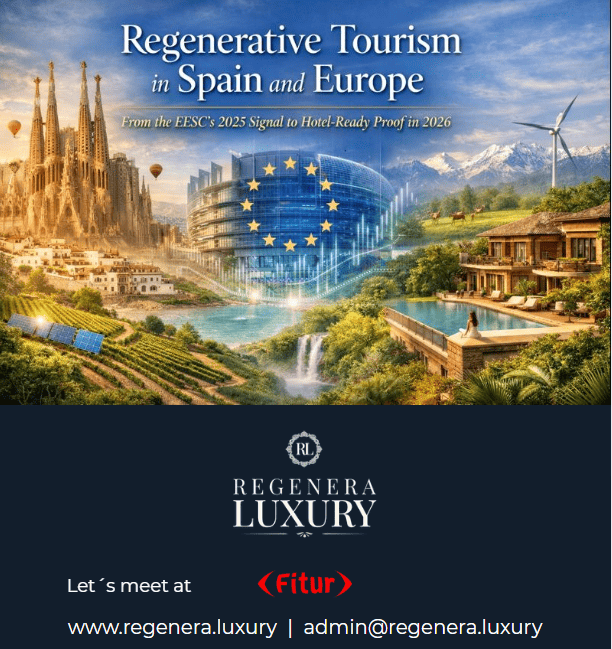 In March 2025, the European Economic and Social Committee (EESC) published a message that still lands with strategic clarity in January 2026: Europe should move beyond sustainability and accelerate toward regenerative tourism
In March 2025, the European Economic and Social Committee (EESC) published an article that still lands with strategic clarity in January 2026: Europe should move beyond sustainability and accelerate toward regenerative tourism—a model designed not only to reduce harm, but to restore and enhance natural, social, and economic capital.
The EESC article reflects a policy inflection point—a formal acknowledgement that the legacy tourism model (volume-led growth, fragile seasonality, and public tolerance assumed by default) is colliding with real limits: housing pressure, resource stress, workforce strain, and rising resident pushback.
Since then, Europe has not calmed down; it has clarified. By October 2025, the European Commission publicly framed sustainability as the core of the EU’s first-ever tourism strategy, explicitly referencing pressures on infrastructure, housing, and communities, and pointing toward a 2026 EU Sustainable Tourism Strategy.
And nowhere is this shift more consequential than Spain—Europe’s hospitality superpower, and one of the first markets where “tourism success” is increasingly judged by social licence as much as revenue.
For General Managers and Sustainability Directors, the practical question is no longer whether regeneration is “a thing.”, but:
What counts as credible regeneration in 2026
—and how do we operationalise it without diluting luxury, performance, or auditability?
This article answers that through two lenses:
The EESC framed tourism as a cornerstone of the EU economy and competitiveness—and argued that the post-pandemic boom was amplifying pressure on destinations, alongside staffing and skills gaps. It called for regenerative tourism to be integrated into Europe’s strategy because sustainability alone—understood as “less harm”—is insufficient when destinations are facing systemic stress.
The EESC also anchored its opinion in the Palma Declaration—a milestone tied to the Spanish Presidency, calling for a competitive, modern, high-quality, sustainable tourism model in the EU.
This matters for Spain because it places the country at the heart of Europe’s tourism transformation narrative: Spain is not only a destination; it is a policy and market laboratory for what comes next.
If 2024–2025 taught Europe anything, it’s that resident sentiment can turn into headlines quickly—and into policy even faster. Reuters reported Spain’s tourism minister condemning incidents where Barcelona visitors were sprayed with water pistols during protests—symbolic, but globally legible. Reuters
By 2025, Reuters also reported Catalonia’s debates around tourist taxes and housing, including proposals to route revenues toward mitigating housing pressure—evidence that “tourism policy” is now inseparable from social stability and affordability.
This is the real context behind the EESC’s call to move beyond volume-led success metrics. Regeneration is not simply an environmental upgrade; in Spain, it is becoming a governance and legitimacy strategy.
In October 2025, Euronews reported that sustainability will guide the EU’s first-ever tourism strategy, highlighting record numbers and mounting climate risks, and the stated need to balance growth with environmental protection and community wellbeing. euronews
Meanwhile, EU “Transition Pathways” communications explicitly invited stakeholders to shape the EU’s 2026 Sustainable Tourism Strategy, including focus areas such as overcrowding, skills, sustainable practices, and resilience. transition-pathways.europa.eu+1
For GMs and Sustainability Directors, this direction has a clear operational consequence:
Expect more scrutiny of claims, more demand for measurement, and more pressure to prove local benefit—especially in Spain’s high-intensity destinations.
Regeneration is often described beautifully and implemented vaguely. The EESC itself points to what’s required: guidelines, instruments, training, investment, and practical transitions (including circular economy principles).
In hotel reality, the execution gap typically shows up as:
In 2026, credibility increasingly depends on whether a property can demonstrate three things at once:
This is precisely where Regenera Luxury differentiates.
Regenera Luxury positions itself as the world’s first regenerative management program and certification for hotels and retreats, and states it was presented by UN Tourism as the first global seal and management system for regenerative luxury hotels and retreats.
Regenera Luxury states its framework combines luxury quality with measurable regeneration across 9 sections and 273 KPIs, supported by dashboards and independent audits.
This KPI density is not a vanity metric. It reflects a core truth: regeneration is multi-dimensional. If you want to credibly claim “net positive” direction, you must measure across the full operating system—energy, water, waste, procurement, HR, community integration, culture, wellness, and governance—while maintaining premium service and brand aesthetics.
Regenera Luxury describes independent, mandatory audits (onsite and desktop in alternating years) as part of maintaining certification levels.
In practice, this answers a central reputational risk for luxury brands: the gap between marketing language and verified performance. Independent audit architecture transforms regeneration from narrative into assurance.
Regenera Luxury highlights dashboards as part of the system—not as a reporting add-on, but as a management tool.
For GMs, this matters because dashboards are where strategy becomes operations: budget decisions, CAPEX planning, supplier selection, HR programmes, guest experience design, and improvement cadence.
Forbes USA’s December 2025 feature described Regenera Luxury as evaluating hotels through 200+ KPIs designed to cover 90%+ of the UN SDGs, blending technical and cultural indicators.
Forbes Spain also stated that regenerative tourism moved beyond theory with the 2022 launch of Regenera Luxury, describing it as the first certification worldwide for regenerative luxury hotels and retreats.
This top media visibility supports partner credibility—especially when combined with the system’s measurable, audited structure. It signals that regenerative luxury is no longer peripheral; it is becoming a market-facing category.
The EESC explicitly raised skills and training gaps as part of the challenge. European Economic and Social Committee+1
Regenera Luxury’s training pathway—including auditor development—speaks to the industry’s most persistent constraint: hotels cannot implement what leadership teams do not understand deeply, consistently, and cross-functionally.
Spain is entering a period where “high-performing” hotels will be expected to do more than optimise resource use. They will be expected to contribute to the destination’s ability to remain liveable, authentic, and resilient—particularly in heritage cores and coastal zones.
This changes the competitive set for luxury hotels in Spain:
Regenera Luxury’s model fits this moment because it is designed around measurable destination-positive performance without compromising luxury experience.
A credible regenerative narrative needs grounded examples. These illustrate how regeneration can be expressed differently—Spain-first, with global proof.

Regenera Luxury features CASA1800 Hotels (Seville and Granada) and has published on CASA1800 joining the community and progressing through evaluation, with emphasis on architecture, local suppliers, art and community relationships, cultural programming, environmental practices, and guest experience design.
For Spain, this is the archetype: heritage hospitality where regeneration must protect authenticity, prevent cultural dilution, and strengthen local value chains—while maintaining premium standards in historic assets.
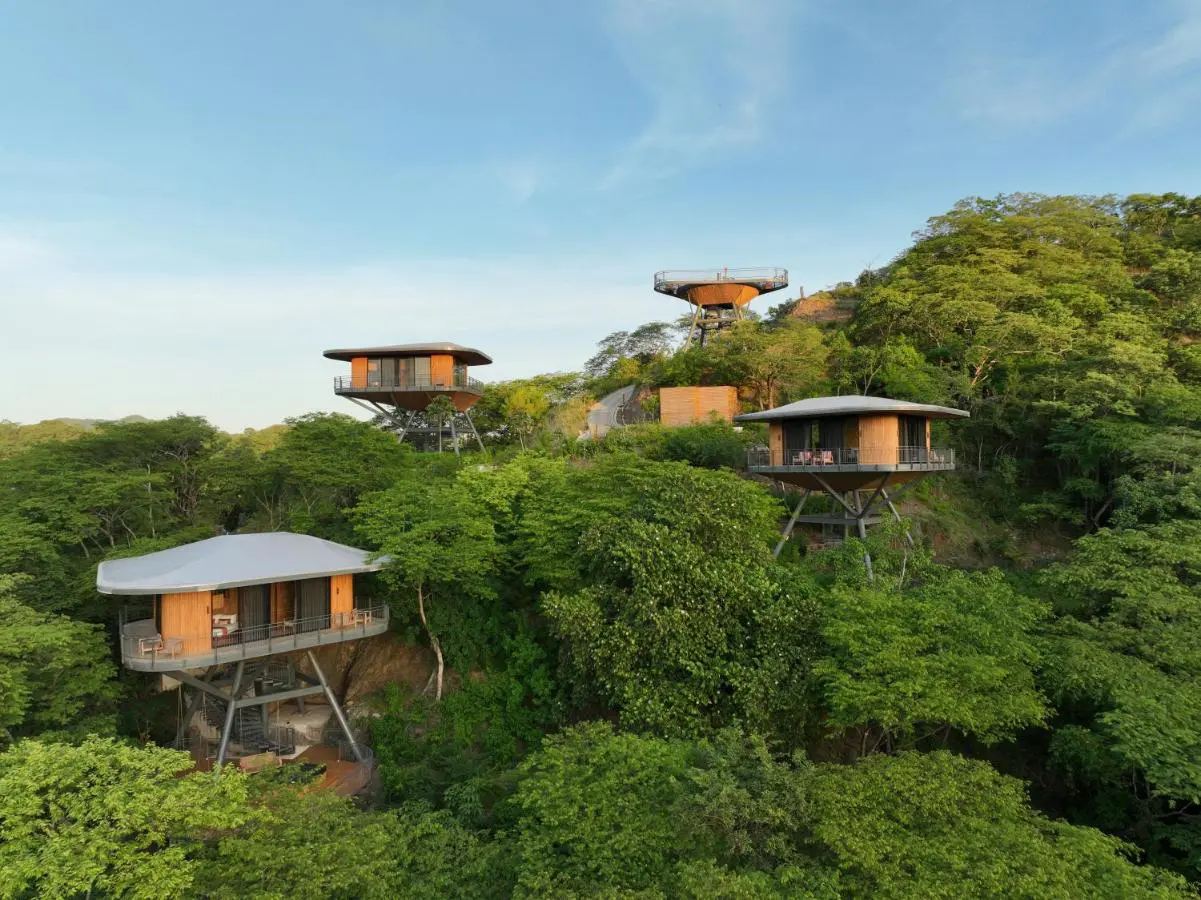
Regenera Luxury states SuiTree Experience Hotel is succesfully progressing through the process toward certification.
Costa Rica remains one of the world’s most recognised nature-forward destinations, and SuiTree reflects how regenerative luxury can be expressed through ecosystem connection and experiential design—useful benchmark learning for global rural and coastal properties.

Regenera Luxury hosted a pioneering event in the region at Nerea Wellness Hotel in Tankah (Mexican Caribbean), positioning the conversation around financial advantages and long-term resilience from regenerative business models.
For Andreas Caprez, GM at Nerea wellness hotel, the takeaway is strategic: “wellbeing is not separate from regeneration. When designed coherently, wellness becomes a measurable pillar of guest experience and place stewardship—rather than a generic spa proposition”.
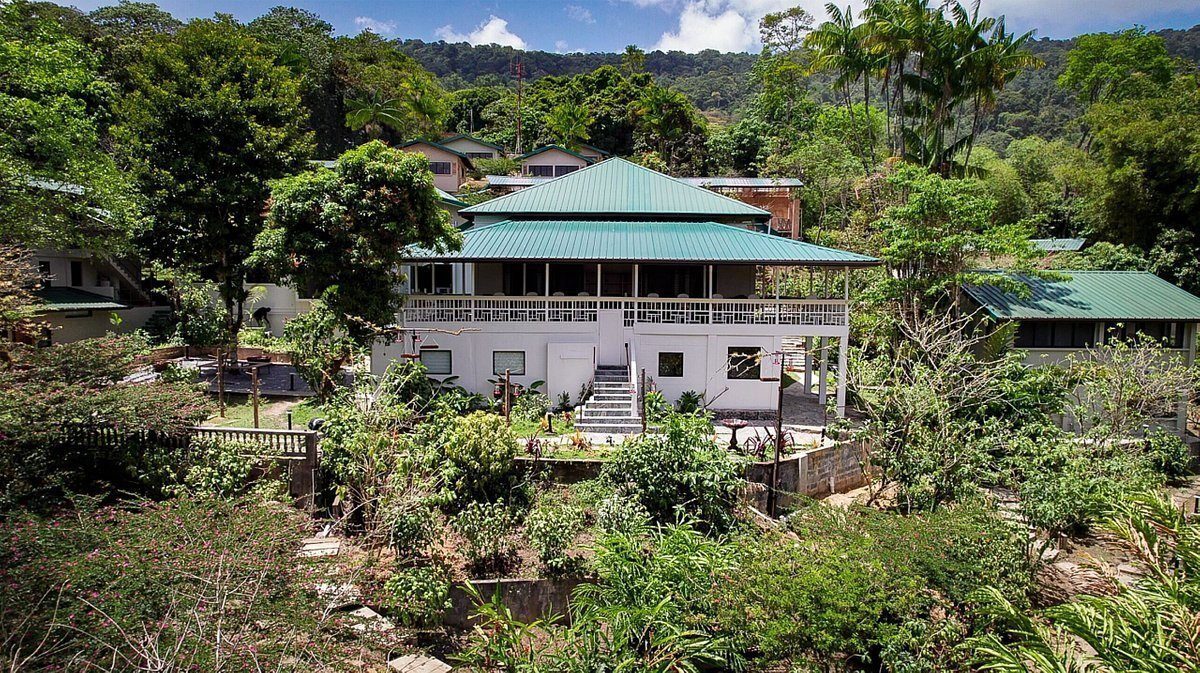
Regenera Luxury describe Asa Wright Nature Centre & Mont Plaisir Estate Hotel as undergoing audits toward certification. Asa Wright’s own mission focuses on preserving part of the Arima Valley in its natural state as a conservation and study area.
This is a high-integrity case: the “luxury” value is inseparable from conservation purpose—an increasingly powerful positioning for discerning regenerative travel audiences.
Many hotels in Spain already work with recognised colleagues and frameworks (e.g., LEED, WELL, Green Globe, GSTC-aligned programmes). The problem is not “how accurate a certification is for certain business model”—it’s that many are optimised for sustainability baselines, not specifically for regenerative outcomes from a hotel or retreat. And even further, toward regenerative luxury, specially if we are focused on hotels, retreats and destinations.
Regenera Luxury explicitly positions itself as “beyond sustainability,” focusing on active ecological and community restoration goals and embedding dashboards and KPIs for regenerative impact.
In practical GM terms, this is how mature hotels should approach the landscape:
For recruitment and conversion, the entry step must be achievable.
Regenera Luxury describes a pathway that includes certification and precertification, positioning it as a structured journey for boutique hotels and retreats.
The strategic role of Precertification is simple: it lowers friction while protecting seriousness. It creates a credible runway for hotels that are ready to lead, but need a structured, measured transition before full certification.
If you are a GM or Sustainability Director evaluating regenerative certification, these are the questions that now separate marketing from leadership:
Regeneration is not a communications layer. It is a competitive operating model—especially in Spain, where the future of tourism is being negotiated in real time.
If your hotel (or retreat) is ready to move from sustainability to measurable regenerative performance—with 273 KPIs, independent audits, dashboards, SDG coverage, and a training pathway designed for luxury operations—book a discovery call with Regenera Luxury to explore certification and the fastest route to benefits, measurable positive impact and credible leadership.
Regenerative travel is emerging as one of the defining ideas shaping the future of tourism. Yet to understand its true...
Read more →
Strategic Alliance: Regenera Luxury x Ownia Collection, Regenera Luxury is proud to announce a strategic partnership with Ownia Collection, a...
Read more →
Europe’s sustainability framework is reshaping the future of hospitality. In 2026, luxury and boutique hotels can no longer rely on...
Read more →