

What Regenerative Travel Truly Means: From Intention to Verified Impact
Regenerative travel is emerging as one of the defining ideas shaping the future of tourism. Yet to understand its true...
Read more → According to the World Economic Forum (2024), nearly 80% of American consumers, which translates to over 330 million people, prefer regenerative brands over traditional sustainable ones. This growing demand for experiences that contribute positively to the environment and communities is directly linked to the higher ADR of regenerative luxury boutique hotels.
A tourism experience that evokes deep emotions, offers exquisite moments, and simultaneously enhances the environment and local communities is no longer a distant vision—it is the essence of regenerative luxury boutique hotels. These properties are more than just eco-friendly; they focus on healing and enriching the environment, community, and culture surrounding them.
As a result, the Average Daily Rate (ADR) for regenerative boutique hotels is projected to outperform that of standard luxury boutique hotels.
According to the World Economic Forum (2024), nearly 80% of American consumers, which translates to over 330 million people, prefer regenerative brands over traditional sustainable ones. This growing demand for experiences that contribute positively to the environment and communities is directly linked to the higher ADR of regenerative luxury boutique hotels. These travelers are willing to pay a premium for properties that align with their values of sustainability, wellness, and cultural enrichment.
Further evidence from Hospitality ON (2024) shows that luxury hotels with a focus on sustainability and regeneration are seeing ADRs that are 20%-30% higher than traditional boutique properties. In Europe, this trend is particularly strong, with regenerative hotels attracting high-net-worth individuals seeking unique, immersive experiences. For instance, regenerative boutique hotels in cities like Rome, Barcelona, and Paris are experiencing ADRs of around €400-€600 per night, compared to €300-€450 per night for standard boutique hotels in the same areas. This difference reflects the added value these properties offer in terms of personalized guest experiences, environmental regeneration, and cultural integration.
According to a report by Skyscanner (2023), 54% of luxury travelers are actively seeking sustainable and regenerative travel experiences. Additionally, 80% of global travelers state they are willing to pay more for a sustainable hotel, with an average price increase of 15%-25% over standard luxury hotels. This indicates a clear trend where the regenerative model not only commands higher prices but also attracts a more dedicated and affluent customer base willing to invest in regenerative practices.
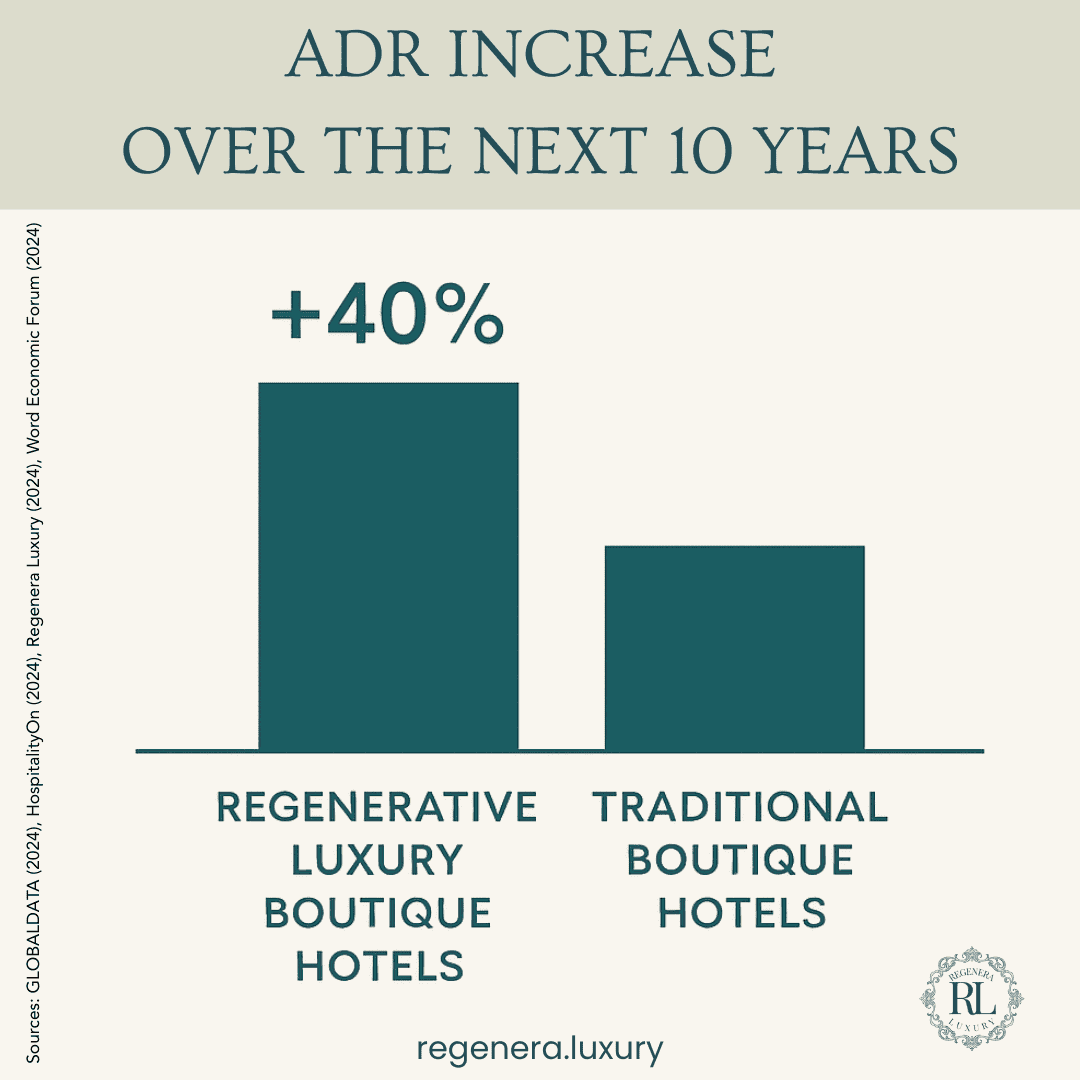
Looking ahead, the global shift towards sustainability is expected to continue influencing ADR trends. According to GlobalData (2024), the global regenerative tourism market is projected to grow at a compound annual growth rate (CAGR) of 12% over the next five years. As this growth unfolds, it is anticipated that regenerative luxury boutique hotels will see an increase in ADR of up to 40% over the next decade, outpacing traditional boutique hotels.
In the U.S., luxury boutique hotels, particularly those that embrace regenerative practices, are experiencing higher ADRs. As of 2024, the average ADR for independent boutique luxury hotels is approximately 440 USD, significantly higher than the 343 USD for branded luxury boutique hotels. The ability of independent properties to offer personalized and unique experiences gives them a competitive edge, especially when incorporating sustainability and regenerative practices into their offerings.
The regenerative luxury sector, in particular, attracts a premium clientele who are willing to pay more for properties that contribute positively to the environment and communities. According to Neil Jacobs, CEO of Six Senses Hotel Group, “The future of luxury hospitality is regenerative. It’s about creating destinations that flourish, not just profitable businesses.” This quote underscores the shift in consumer expectations, where the experience of rejuvenation extends to both the traveler and the place they visit.
Europe’s luxury boutique hotel market is also benefiting from the regenerative tourism growth. In cities like Paris, Rome, and Barcelona, luxury hotels have seen significant increases in ADR. For instance, Rome and Paris experienced ADR growth of 51.9% and 51.8% respectively, compared to pre-pandemic levels. Luxury boutique hotels in these regions, which offer curated experiences grounded in cultural heritage and sustainability, command higher rates. Hotels such as CASA 1800 in Granada and Seville, Spain, which occupy 16th-century palaces, are taking part in the regenerative movement by preserving their historical integrity while integrating sustainable and regenerative practices into their operations. These efforts are raising their ADR significantly, as travelers are increasingly seeking hotels that provide both luxury and cultural depth.
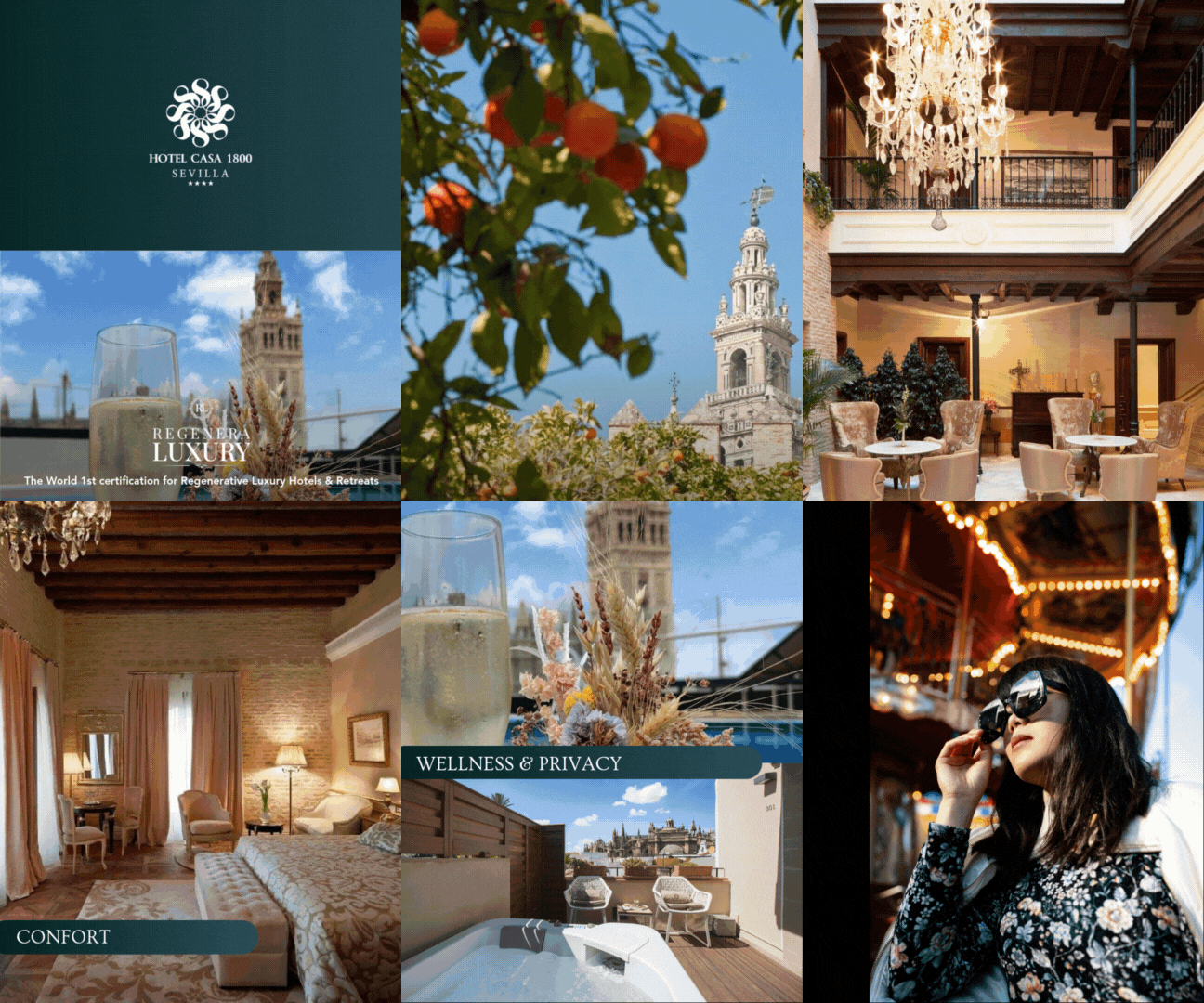
Beyond city centers, Mt Plaisir in Trinidad and the Akalki Retreat in Bacalar Lagoon, Mexico, are leading the way in regenerative luxury tourism in remote locations. These properties, in process of RL certification, are setting new standards for regenerative tourism in boutique hospitality by promoting environmental conservation and community engagement, offering a unique value proposition to their guests.
In the Middle East, particularly in Saudi Arabia, there is a remarkable effort to position the region as a leader in regenerative luxury tourism. Saudi Arabia’s Vision 2030 plan includes a focus on sustainability and regeneration as core pillars of its development. The Kingdom is investing heavily in new tourist destinations that promote these values, with initiatives focused on preserving natural environments and enhancing the cultural heritage of the region.
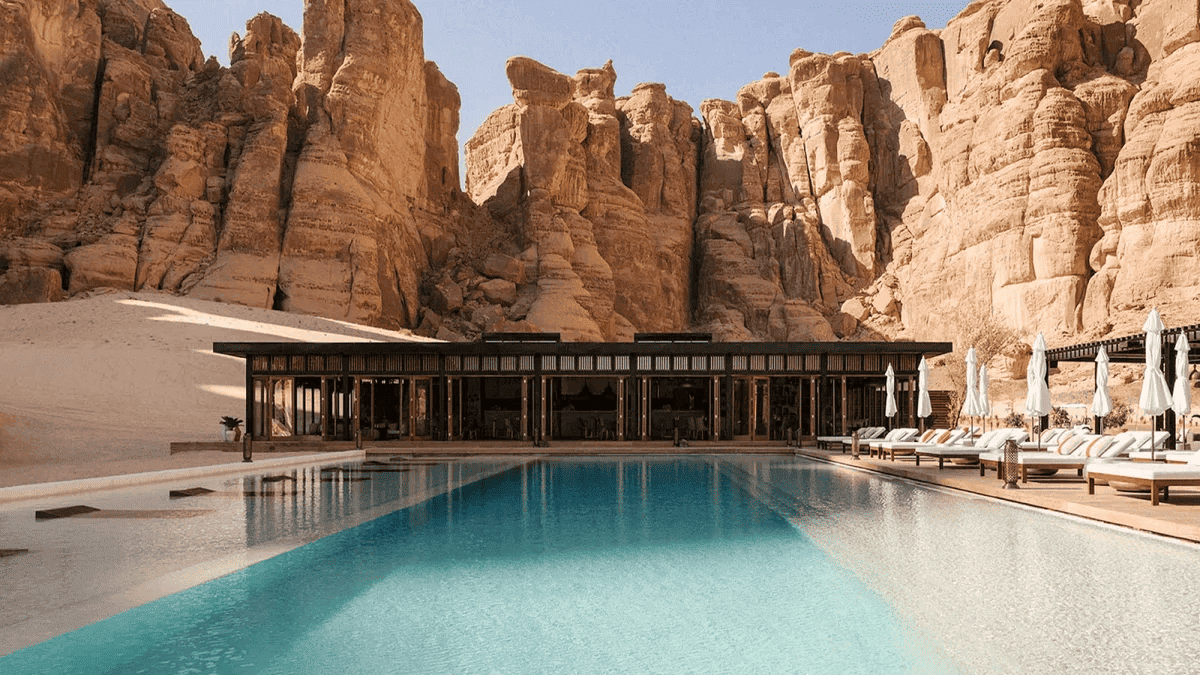
In Saudi Arabia’s AlUla, the opening of luxury regenerative properties by brands like Six Senses and Aman is driving ADRs to exceed $1,000 per night—a notable increase from the average for standard boutique hotels in the region, which typically range from $400-$600 per night. This ADR premium reflects both the exclusivity of these properties and the increasing demand for regenerative travel experiences.
Southeast Asia remains a key player in the regenerative luxury boutique hotel sector, with destinations like Bali, Ubud, at the forefront. These locations are attracting a new wave of travelers seeking wellness and sustainability in their luxury experiences. Ubud in Bali, in particular, has long been a center for wellness retreats, and the trend toward regenerative tourism is now sweeping through the area, with luxury boutique hotels integrating eco-friendly practices alongside healing and wellness experiences.
Latam
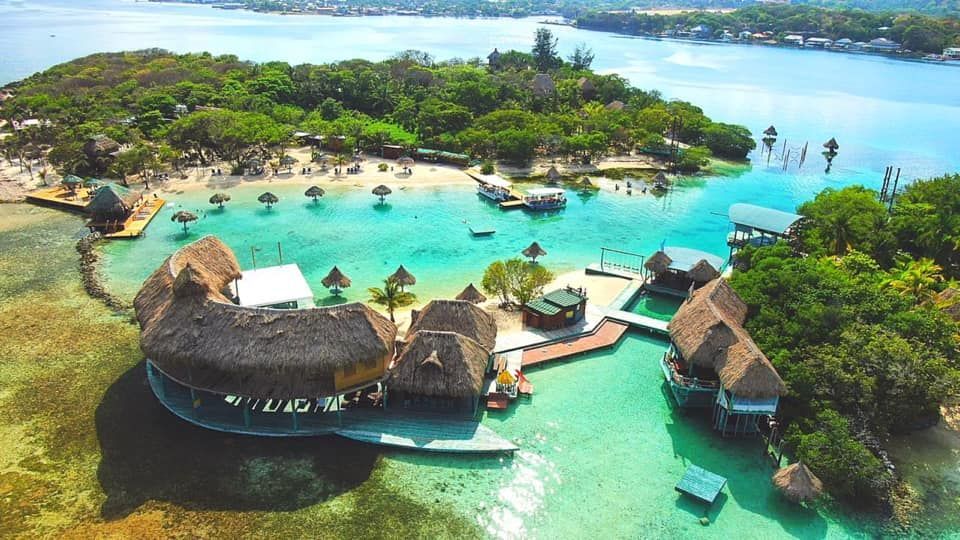
Roatan Island in Honduras is another example of how regenerative tourism is taking hold in exotic, lesser-known destinations. The island’s commitment to preserving marine biodiversity and supporting local communities has made it a prime example of regenerative luxury tourism in the Caribbean. Luxury boutique hotels here, such as Little French Key (below in the photo), and Paradise, are setting benchmarks for sustainability in the region.
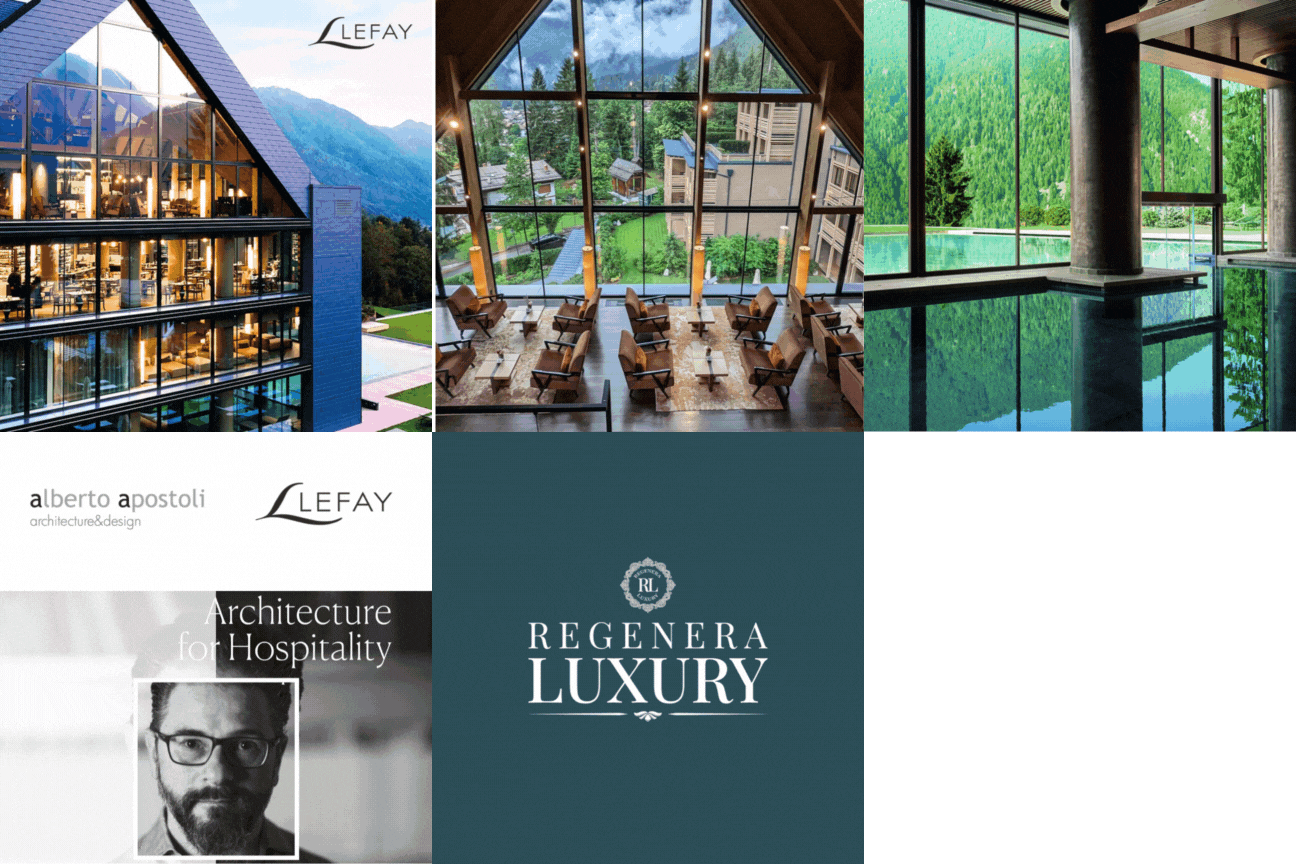
In addition, properties like SHA Wellness are embracing regenerative principles, merging wellness with sustainable luxury. SHA Wellness, already recognized for its holistic approach to health, is expanding its regenerative offerings to integrate more eco-friendly practices in its operations. Wellness destinations like Lefay Resort & Spa Dolomiti, designed by the renowned Alberto Apostoli Studio, also exemplify regenerative luxury by offering not only wellness but an immersive connection with nature and sustainable practices.
The key distinction between standard boutique luxury hotels and regenerative luxury boutique hotels lies in the commitment not to “harm less” but to actually and actively improving environment, cultural legacy and community balance.
Regenerative luxury boutique hotels typically demand and have a higher ADR due to the added value they provide through regeneration and cultural immersion. Properties like Soneva Fushi in the Maldives epitomize this model, offering ultra-luxury experiences while preserving the pristine environment and supporting local community.
Similarly, Our Habitas, a growing brand with locations in Bacalar, Mexico, and AlUla, Saudi Arabia, embraces the regenerative luxury model. Their commitment to improve, wellness, ecosystem and community engagement, and offers guests a premium, regenerative experience that sustains a higher ADR.

According to the World Economic Forum, “Nearly 80% of American consumers, that is 330+ million people, prefer ‘regenerative’ brands over ‘sustainable’ brands.” This shift reflects a growing consumer preference for experiences that offer not only luxury but also environmental and social regeneration. For luxury boutique hotels, this trend is critical for understanding how ADR can be maximized by integrating regenerative principles.
Furthermore, with the rise of wellness tourism, regenerative luxury hotels are increasingly incorporating wellness services as part of their core offerings. Brands like WorldSpa, Lefay Resort & Spa Dolomiti, and SHA Wellness are positioning themselves at the intersection of wellness and regenerative luxury, offering services that promote not only physical but emotional and spiritual regeneration. This integration of wellness with regeneration is expected to drive higher ADRs, particularly as consumers become more conscious of the impact of their travel on the planet and communities.
Regenerative luxury is no longer a niche segment within the hospitality industry—it is fast becoming the gold standard for high-end, boutique hotels.
The integration of regenerative principles into the luxury hospitality model not only boosts the ADR but also positions properties to appeal to the growing consumer base that prioritizes sustainability, cultural immersion, and wellness.
As the market for regenerative luxury hotels expands, regions like the Middle East, Southeast Asia, the Caribbean, and Europe will continue to witness a surge in ADR, with properties that embody these principles standing at the forefront of the hospitality industry. Luxury boutique hotels that integrate regenerative practices—whether through environmental sustainability, community engagement, or wellness offerings—will be the ones that set new benchmarks for success.
For hotel CEOs, owners, and general managers, understanding the financial and strategic benefits of embracing regenerative luxury is crucial. The data clearly shows that the future of luxury hospitality is regenerative, and those who adapt to this new reality will not only thrive financially but will also help lead the industry into a more sustainable and impactful future.
As Neil Jacobs wisely stated, “The future of luxury hospitality is regenerative. It’s about creating destinations that flourish, not just profitable businesses.”

Bibliography
Asian Hospitality. (2024). Boutique hotel report: 2025 U.S. performance forecast. Retrieved from https://www.asianhospitality.com
Hospitality ON. (2024). August 2024: Hotel trends in European markets. Retrieved from https://www.hospitality-on.com
Caribbean Journal. (2024). Trends in boutique luxury hotels and resorts in the Caribbean. Retrieved from https://www.caribjournal.com
World Economic Forum. (2024). Consumers’ preference for regenerative brands over sustainable ones. Retrieved from https://www.weforum.org
GlobalData. (2024). Regenerative tourism market growth projections. Retrieved from https://www.globaldata.com
Skyscanner. (2023). Luxury travelers’ preferences for sustainable and regenerative travel. Retrieved from https://www.skyscanner.com
Regenerative travel is emerging as one of the defining ideas shaping the future of tourism. Yet to understand its true...
Read more →
Strategic Alliance: Regenera Luxury x Ownia Collection, Regenera Luxury is proud to announce a strategic partnership with Ownia Collection, a...
Read more →
Europe’s sustainability framework is reshaping the future of hospitality. In 2026, luxury and boutique hotels can no longer rely on...
Read more →