
What Regenerative Travel Truly Means: From Intention to Verified Impact
Regenerative travel is emerging as one of the defining ideas shaping the future of tourism. Yet to understand its true...
Read more → SOSEI: Regenerative Luxury and the Evolution of Barefoot Tourism
The confirmation of the launch of SOSEI by Sonu and Eva Shivdasani — figures who rewrote the rules of luxury in the Maldives with Soneva and contributed to the rise of the Six Senses phenomenon — is far more than the unveiling of a new brand. It is a clear manifestation of a conceptual transition in the luxury industry towards models that prioritize environmental regeneration, cultural health, and community wellbeing. The announcement, shared in an recent interview with Travel + Leisure Asia, highlights a professional and human journey that once again places responsible innovation at the center of hotel design.
–
When the Shivdasanis opened Soneva Fushi in 1995, they introduced what is now known as “barefoot luxury”: an experience privileging authenticity, a deep sense of place, and sophisticated simplicity — epitomized by their motto “No News, No Shoes” — while incorporating practices ahead of their time: local production, circular waste management, plastic reduction, and on-site water and energy solutions. These were not a passing trend but the foundation of a replicable model that transformed the Maldives’ value chain.
SOSEI — a Japanese term meaning “rebirth” — now signals an expansion of this original approach into urban, mountain, and polar environments, blending Japanese traditions of hospitality and wellness with regenerative strategies adapted to diverse contexts. This pivot reflects a broader ambition: to take the principles of regenerative luxury beyond island enclaves into a wider range of hotel typologies.
–
The scale and relevance of tourism in the global economy underscores why the luxury sector must lead the regenerative transition. In 2024, the Travel and Tourism sector contributed approximately US$10.9 trillion to global GDP and supported 357 million jobs — about 1 in every 10 jobs worldwide — meaning any shift in this sector has far-reaching economic and social impacts (WTTC, 2024).
The luxury travel market remains both vast and resilient. Recent estimates place the size of the global luxury market at USD 1.48 trillion in 2024, with sustained growth projected through 2030 (Grand View Research). This creates a critical window for brands integrating regenerative value to capture an increasingly conscious and discerning premium demand.
At a strategic level, global organizations and forums have described tourism as being at “a tipping point” and capable of becoming a driver of transformation if it embraces regenerative principles and collaborative governance (World Economic Forum). The combination of market size and visibility makes the luxury segment the ideal laboratory for demonstrating scalable, financially viable solutions.
–
At Regenera Luxury, we define regenerative luxury as a standard requiring a shift from mitigation (doing less harm) to active restoration (improving ecosystems, strengthening social fabric, and regenerating cultural capital). Technically, a regenerative luxury project should demonstrate at least the following:
These elements enable the measurement of regenerated value and its rigorous communication to stakeholders: investors, communities, regulators, and high-net-worth clients.
–
The concept of barefoot tourism — beyond the symbolic gesture of taking off one’s shoes — synthesizes an experience of sophisticated simplicity: reduced operational footprint, deeper immersion in local contexts, elimination of excess services that add no real value, and a materially and emotionally different relationship between guest and place. In practice, this translates into low-carbon itineraries, zero-kilometer local restoration, culturally immersive experiences co-designed with communities, and regenerative learning circuits for guests. Soneva codified this practice and demonstrated that luxury demand appreciates — and pays for — authenticity and connection.
–
Because of its stated philosophy and operational style, SOSEI has exceptionally high potential to successfully meet the Regenera Luxury criteria. This would mean mapping SDGs for each property, defining KPIs, implementing science-based restoration plans, designing governance frameworks with community co-responsibility, and ensuring third-party verification — the very pillars of our certification.
–
Luxury tourism is an enormous lever for scaling regenerative practices thanks to its investment capacity, media visibility, and client willingness to pay for intangible value (transformative experiences, health, and purpose).
“Incorporating regenerative criteria is not only an ethical choice but a competitive advantage that reduces regulatory risk, enhances resilience, and accesses a growing environmentally conscious market segment (Hector De Castro, CHairman of Regenera Luxury).“
Within this context, brands like SOSEI have the opportunity to lead systemic change: to become demonstration cases that elevate standards in design, operations, and tourism governance at a global scale.
–
SOSEI is not merely the latest venture of a couple who transformed the Maldives; it is the continuation of a trajectory that demonstrates how hotel design can be an agent of ecological and social renewal. At Regenera Luxury, we believe this is the inevitable path: transforming the luxury segment into a regenerative force that delivers measurable results for nature, communities, and human wellbeing.
We invite developers, operators, and investors seeking enhanced value, credibility, and rigor to explore the technical framework of the Regenera Luxury certification and discover how our criteria can accompany and validate projects like SOSEI in their transition toward net regeneration.
🔗 For more information on criteria, methodologies and certification processes: Regenera Luxury
Photo: Travel + Leisure Asia

Regenerative travel is emerging as one of the defining ideas shaping the future of tourism. Yet to understand its true...
Read more →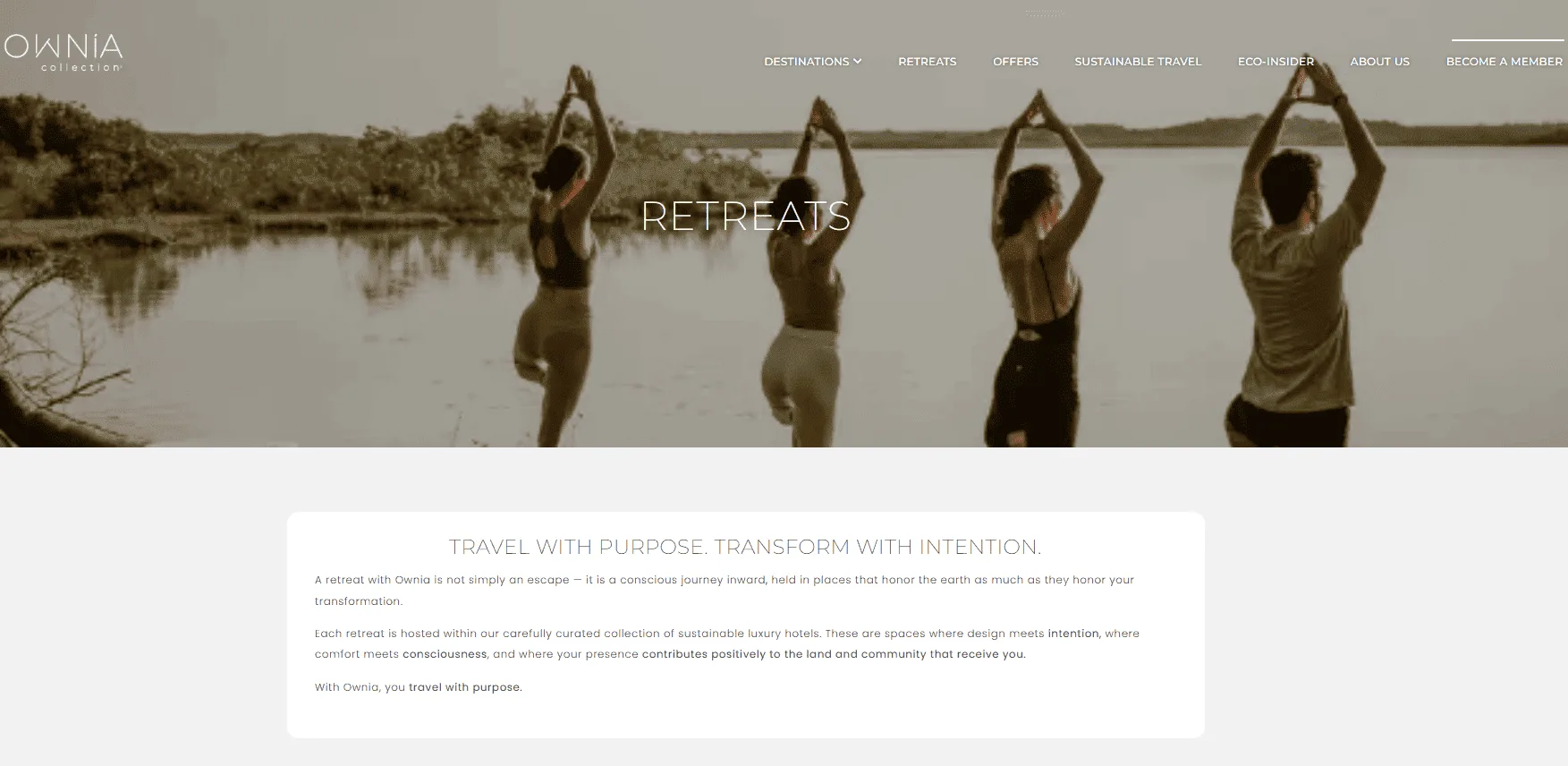
Strategic Alliance: Regenera Luxury x Ownia Collection, Regenera Luxury is proud to announce a strategic partnership with Ownia Collection, a...
Read more →
Europe’s sustainability framework is reshaping the future of hospitality. In 2026, luxury and boutique hotels can no longer rely on...
Read more →