
What Regenerative Travel Truly Means: From Intention to Verified Impact
Regenerative travel is emerging as one of the defining ideas shaping the future of tourism. Yet to understand its true...
Read more →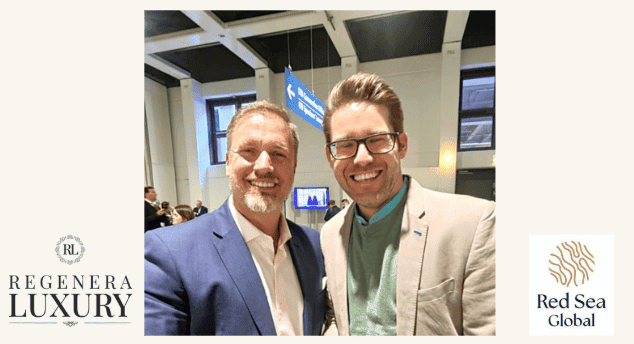 Red Sea Global, Saudi Arabia, and the Strategic Future of Regenerative Luxury Tourism
Author: Hector De Castro
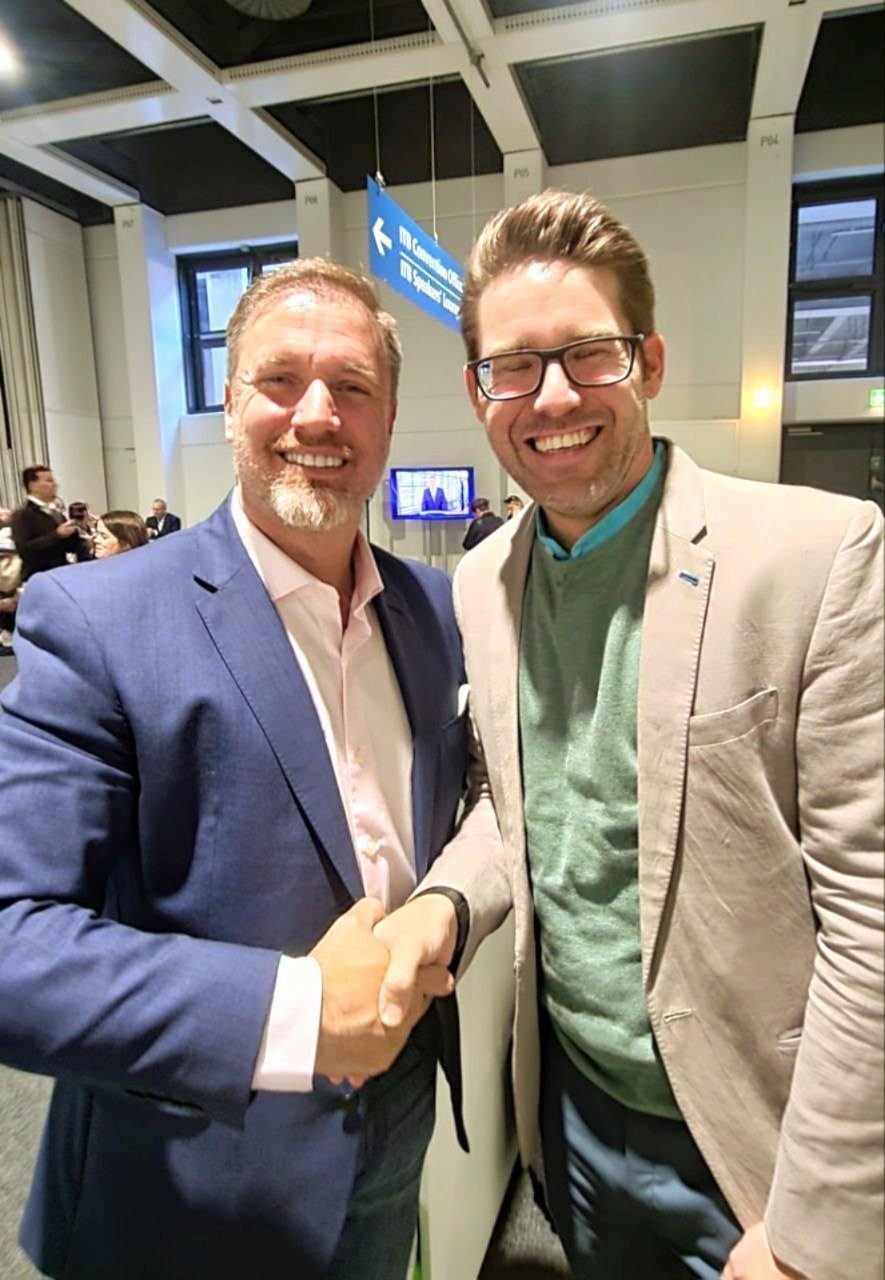
At ITB Berlin, I had the pleasure of an excellent meeting with Martin Baeuerle, Manager Regenerative Tourism Operations at Red Sea Global, exploring in greater depth the future of regenerative tourism in Saudi Arabia and the wider Middle East. The conversation confirmed something I have believed for some time: the Kingdom is no longer simply developing luxury destinations. It is actually moving toward higher transparency and creating one of the most important global case studies in how tourism, conservation, infrastructure, and national transformation can converge. In today’s context, that discussion is about resilience, trust, and long-term value creation.
Tourism is entering a different era. For years, competitiveness could still be driven primarily by desirability: iconic landscapes, strong branding, new air routes, ambitious development, and exceptional design. Those factors still matter, but they are no longer enough. The operating environment has hardened. Russia’s full-scale invasion of Ukraine has entered its fifth year, and the latest escalation around Iran has disrupted aviation, shaken confidence across the Gulf, and exposed how quickly regional instability can affect destination economics far beyond the immediate conflict zone. Reuters has reported that the Gulf has endured more than 2,000 missile and drone attacks since the current war began, while the broader Russia-Ukraine war continues to affect energy, airspace, and security assumptions across Europe and beyond.
“In today’s geopolitical climate, regenerative tourism is no longer only about sustainability.
It is increasingly about resilience, trust, and the protection of long-term destination value.”
For travel and hospitality, these are not abstract geopolitical events. They influence routes, insurance, investor sentiment, airline schedules, energy costs, and traveller psychology. Reuters reported that the widening Iran conflict has already driven large-scale flight cancellations and reroutings, including severe disruption at major Gulf hubs, while airlines such as KLM have suspended Dubai services and travel companies have begun to adjust expectations in response to weaker demand. In other words, demand is not disappearing. It is becoming more selective and more sensitive to perceived stability.
That broader shift is visible in traveller research as well. The European Travel Commission found that 51% of long-haul travellers now cite safety as the leading criterion when choosing a European destination. At the same time, UN Tourism reported that international tourist arrivals still grew 4% in 2025 and expects another 3% to 4% growth in 2026, despite growing geopolitical headwinds. The lesson is clear: global tourism remains resilient, but the basis of competitiveness is changing. Beauty still attracts, but trust increasingly determines where demand lands.
This is precisely why Saudi Arabia deserves such close attention.
According to the Saudi Ministry of Tourism, the Kingdom recorded 116 million tourists in 2024, including around 30 million inbound visitors, while inbound tourism spending reached SAR 168.5 billion. WTTC projects that Travel & Tourism will contribute SAR 447.2 billion to the Saudi economy in 2025 and support 2.7 million jobs, accounting for more than 10% of GDP. These are not incremental improvements. They reflect a strategic national repositioning in which tourism is becoming a central pillar of long-term diversification and global relevance.
Within that transformation, Red Sea Global stands out as one of the most consequential tourism developers in the world today. Its flagship destination, The Red Sea, is positioned by the company as a pioneering regenerative tourism destination on Saudi Arabia’s west coast. By 2030, the development is planned to include 50 hotels with 8,000 rooms and more than 1,000 residential properties across 22 islands and six inland sites, while visitor numbers are capped at 1 million annually in order to preserve the ecosystem. That cap is not a marketing detail. It is a strategic signal that carrying capacity is being treated as a design principle rather than an afterthought.
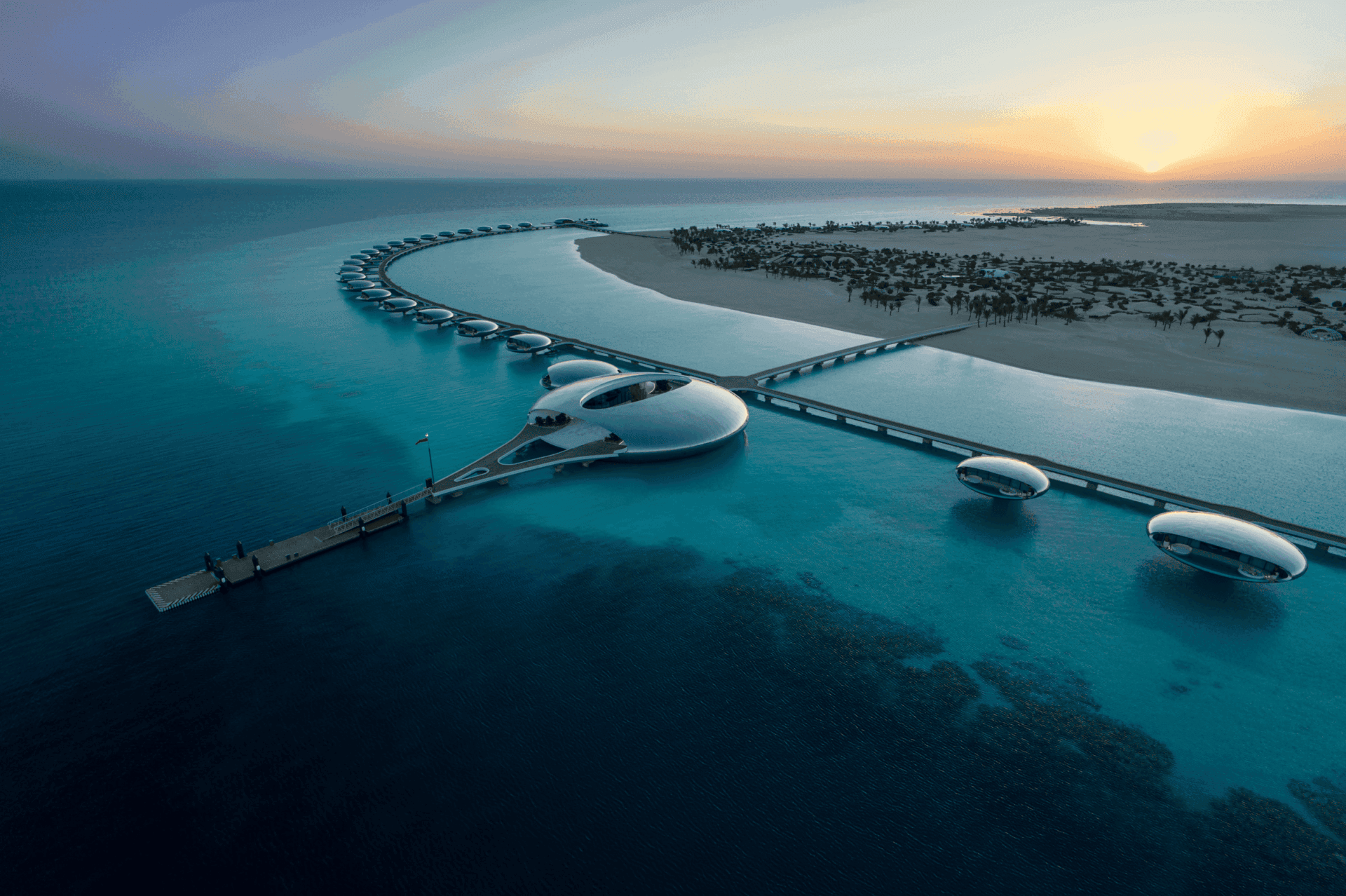
What makes the Red Sea model especially relevant is that ecological intelligence appears to have informed the development logic from the start. Red Sea Global’s marine spatial planning work with KAUST covered the 2,081 km² Al Wajh Lagoon, which includes more than 90 islands and a highly sensitive mosaic of reefs, mangroves, seagrass, bird habitats, and turtle nesting areas. As a result of that work, only 22 islands were selected for development. That is one of the clearest indicators that the project is trying to align development ambition with ecological limits. In regenerative tourism, credibility begins when the masterplan accepts what should not be built.
The biodiversity agenda is equally notable. Red Sea Global has publicly committed to achieving a 30% net conservation gain by 2040 across The Red Sea and AMAALA and, in February 2026, published a science-based model explaining how it intends to pursue that goal. Its official reporting also references active restoration systems, including a major mangrove initiative and plant-production infrastructure designed to support habitat enhancement at scale. This matters because one of the persistent weaknesses in hospitality sustainability has been the gap between narrative and methodology. Regeneration becomes more meaningful when conservation intent is translated into measurable ecological targets and operational frameworks.
Energy and infrastructure reinforce that same point. Red Sea Global states that its first phase is supported by 760,000 solar panels and large-scale battery storage designed to supply renewable power around the clock. Depending on the stage of project communication, the storage figure has been cited by the company at 1,000 MWh and later at 1,300 MWh, reflecting the evolution of the system as implementation advanced. The wider message is unmistakable: this is an attempt to build destination-scale luxury tourism around renewable infrastructure rather than conventional fossil-intensive systems softened only by later offsets or communication.
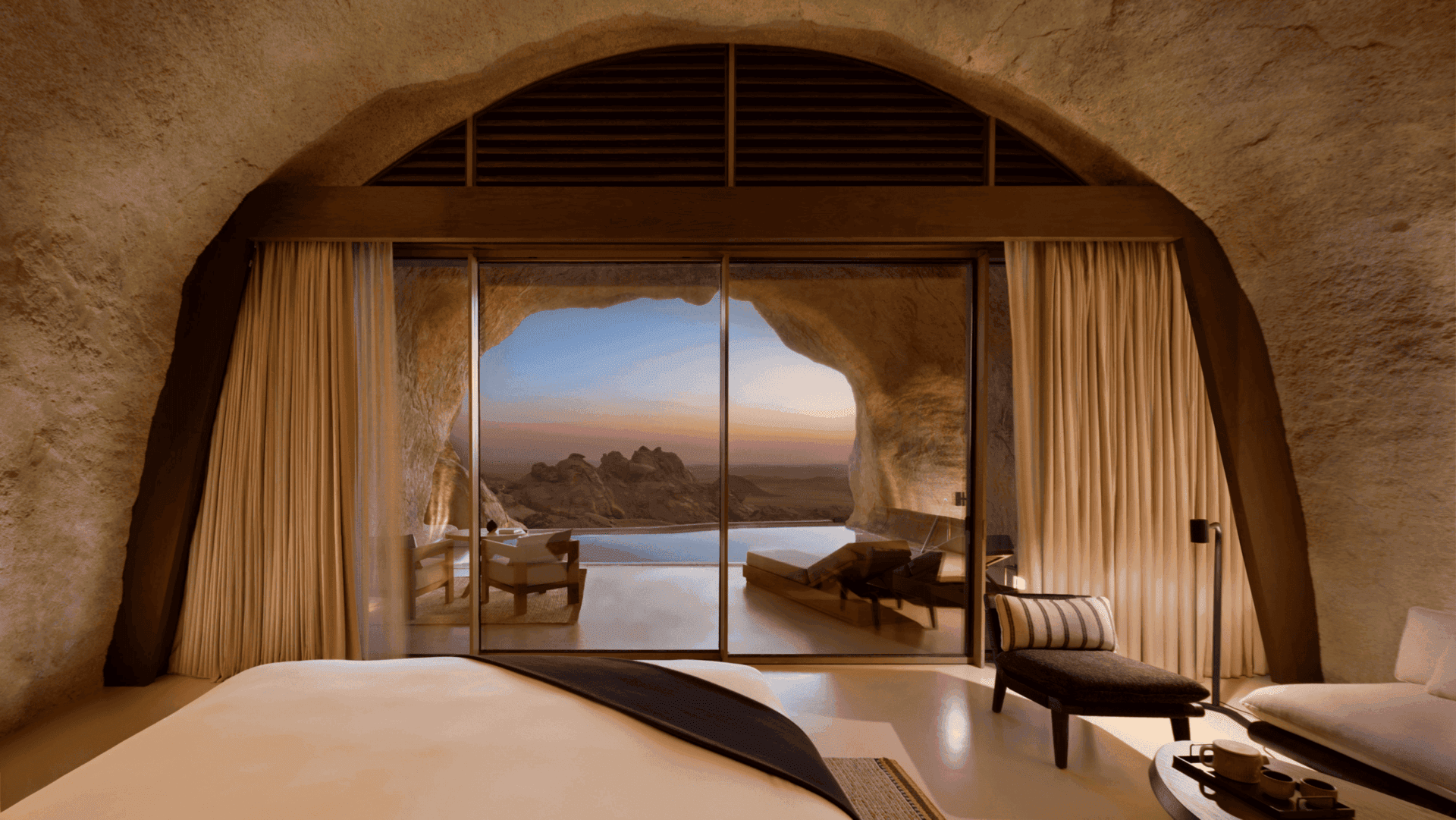
Design excellence has also been central to the model. Properties such as Shebara and Desert Rock demonstrate that Saudi Arabia is not pursuing low-impact tourism by abandoning the visual and experiential standards of global luxury. On the contrary, it is attempting to prove that ecological sensitivity, architectural ambition, and destination drama can coexist. That is important for the global market because one of the false assumptions in hospitality has been that regeneration must somehow be aesthetically modest or commercially secondary. The Red Sea proposition suggests the opposite: that the future of luxury may belong to those who can combine emotional impact with territorial intelligence.
The social dimension is just as important. Red Sea Global’s Hospitality Pioneers program, developed with the University of Tabuk, is designed to train and employ local talent through a two-and-a-half-year pathway leading to an accredited diploma. The company has also highlighted broader education and workforce initiatives through its responsible-development platform. These initiatives matter because no destination can credibly claim to be regenerative if it restores landscapes while failing to build meaningful local capacity, dignity, and opportunity. A regenerative destination must strengthen the human system as well as the ecological one.
And yet this is exactly the point at which the industry must become more demanding.
The word “regenerative” is gaining prestige in tourism, but prestige without discipline is dangerous. The more the concept circulates, the greater the risk that it becomes detached from evidence. A compelling masterplan, a refined sustainability narrative, or an impressive resort portfolio does not by itself prove regenerative impact. The next frontier for the Middle East, in my view, is not simply to scale ambition. It is to scale management discipline, measurable impact, and independent verification. Without that, the sector risks turning regeneration into a high-end vocabulary rather than a serious operating model.
This is where Regenera Luxury becomes especially relevant.

Regenera Luxury positions itself as the world’s first and leading Regenerative Management Program (RMP) with certification for hotels and retreats, as presented by UN Tourism. According to the official framework, the program integrates luxury standards with measurable regeneration across 9 sections and 273 KPIs, supported by dashboards and independent audits. That architecture matters because regeneration cannot be governed by inspirational language alone. It requires baselines, indicators, action plans, monitoring logic, and external accountability. In high-value destinations and asset-heavy luxury markets, those elements are not optional. They are what turn intent into management.
The distinction between the RMP and certification is critical. The RMP is the management layer. It is where a hotel, retreat, or destination translates aspiration into real operational structure across governance, ecology, community relationships, cultural integration, procurement, wellbeing, water, energy, and overall territorial impact. Certification, by contrast, should confirm whether that management process is robust and whether impact claims are sufficiently evidenced. Regenera Luxury’s own certification framework states that certified members must undergo independent, mandatory onsite and desktop audits in alternating years. In a sector increasingly exposed to greenwashing and regenwashing, that is exactly the kind of rigor the market will demand more often, not less.
This is particularly relevant in the Gulf. Luxury hospitality in Saudi Arabia and the UAE is expanding in a region that is simultaneously ambitious and geopolitically exposed. The current instability has shown how quickly airspace, ports, confidence, and pricing can be affected. Reuters reported that tourism worth roughly $367 billion annually to the Middle East is now under pressure from the Iran conflict, with analysts warning of potentially large losses in traveller volumes and visitor spending if uncertainty persists. Under those conditions, the most resilient assets will not simply be the most beautiful or the most expensive. They will be the ones with stronger foundations: better governance, more rooted value chains, greater legitimacy with place, and systems capable of proving positive impact over time.
That is why our regional presence matters. Regenera Luxury’s annual report states that our team already operates in 15 countries, including Saudi Arabia and the Emirates. The organization’s official team and auditors pages also show in-market representation and Saudi-based audit capacity. For the Middle East, that is not a minor advantage. It means that implementation, advisory work, training, and audit processes can be supported locally while still aligned with international standards and independent-review logic. In a region where credibility, context, and speed of execution matter enormously, local presence is part of strategic relevance.
From this perspective, Saudi Arabia is not simply a promising growth market. It is one of the places where the next chapter of global luxury tourism will be tested most visibly.
Red Sea Global is important because it is trying to build the future of destination development at scale: science-led, luxury-driven, ecologically bounded, and increasingly conscious of conservation outcomes. Saudi Arabia is important because it has the political will, capital, and ambition to accelerate new tourism models far faster than many mature markets. And Regenera Luxury is important because the future of regenerative hospitality will not be decided by rhetoric. It will be decided by who can manage, measure, audit, and verify impact with seriousness.
“Red Sea Global is important because it is building the future of luxury tourism at scale.
Regenera Luxury is important because it offers a way to manage and verify
whether that future is truly being delivered.”
My conclusion is simple.
In a world shaped by the fifth year of war in Ukraine, escalating instability linked to Iran, disruption across Gulf aviation and infrastructure, and growing scrutiny of sustainability claims, luxury hospitality needs more than compelling stories. It needs frameworks that protect value under pressure. It needs tools that connect regeneration to resilience. It needs leaders prepared to move beyond image toward evidence.
And that is where Saudi Arabia, Red Sea Global, and Regenera Luxury may together help define the next chapter of global luxury tourism.
–
Photo caption: Héctor de Castro with Martin Baeuele of Red Sea Global at ITB Berlin, where discussions focused on the next phase of regenerative tourism planning, resilience, and measurable impact in Saudi Arabia.monstrate that they are strengthening the ecosystems, communities, cultural identities, and operating systems on which their success depends.
Regenerative travel is emerging as one of the defining ideas shaping the future of tourism. Yet to understand its true...
Read more →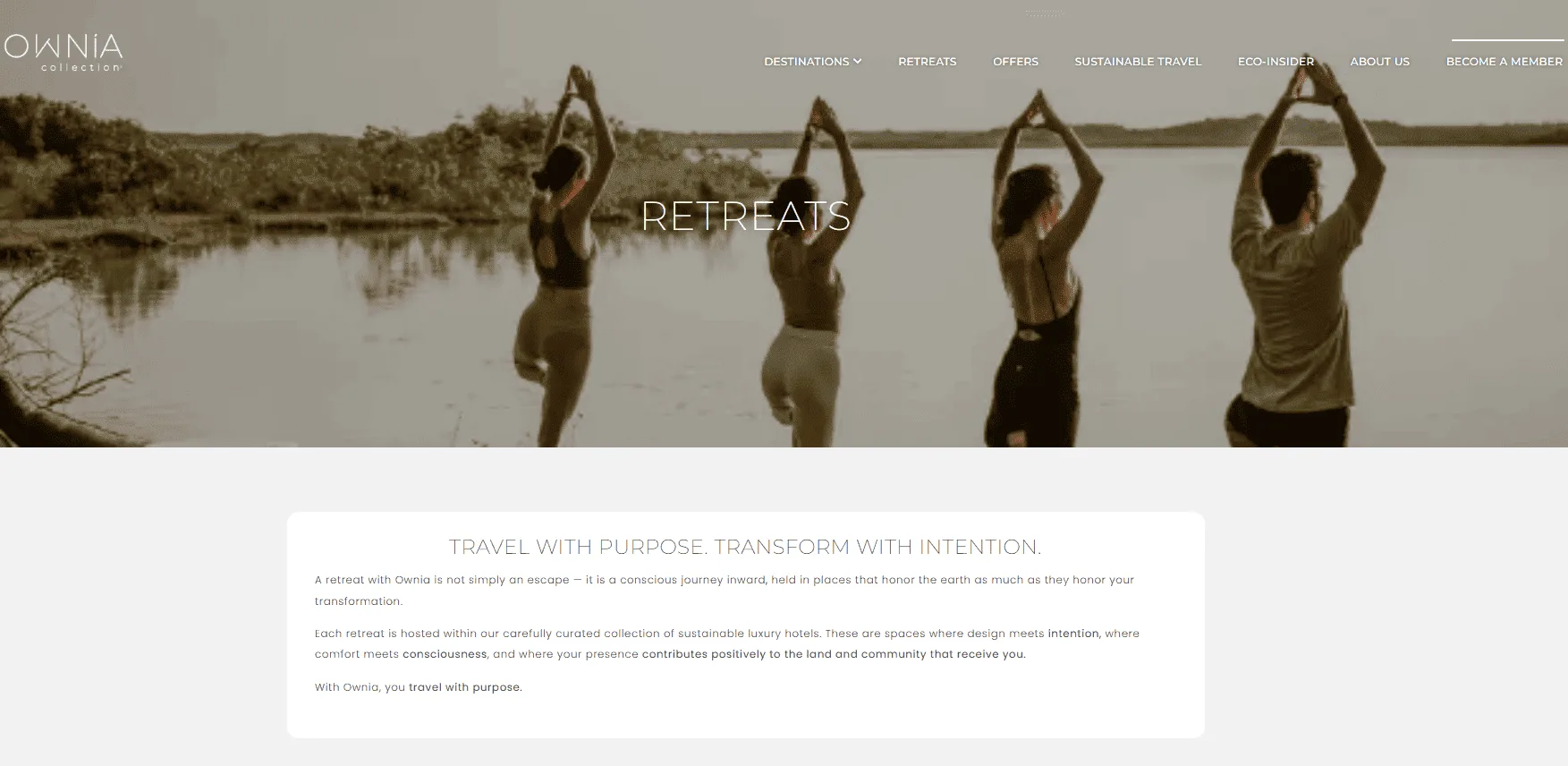
Strategic Alliance: Regenera Luxury x Ownia Collection, Regenera Luxury is proud to announce a strategic partnership with Ownia Collection, a...
Read more →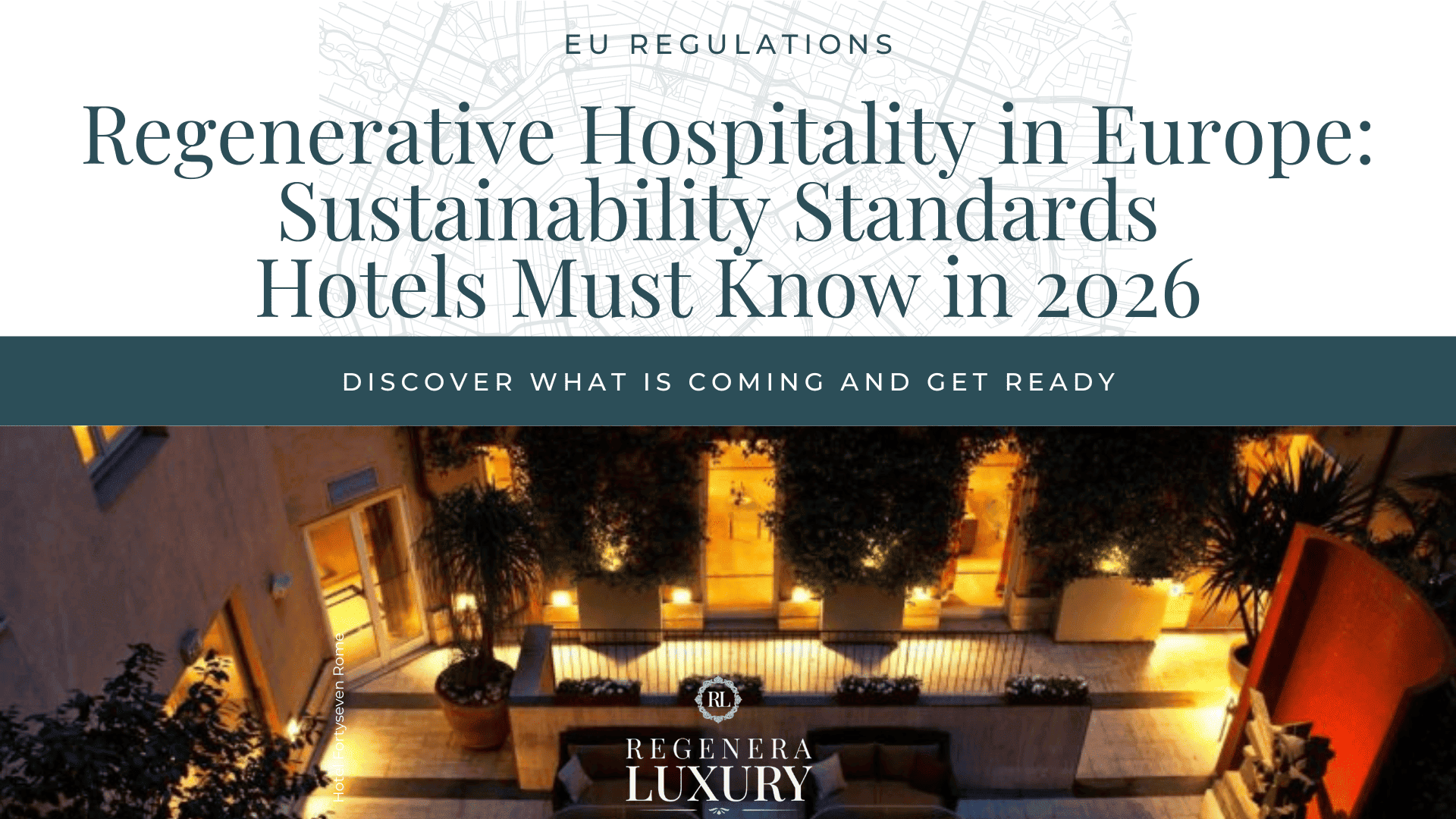
Europe’s sustainability framework is reshaping the future of hospitality. In 2026, luxury and boutique hotels can no longer rely on...
Read more →