
What Regenerative Travel Truly Means: From Intention to Verified Impact
Regenerative travel is emerging as one of the defining ideas shaping the future of tourism. Yet to understand its true...
Read more →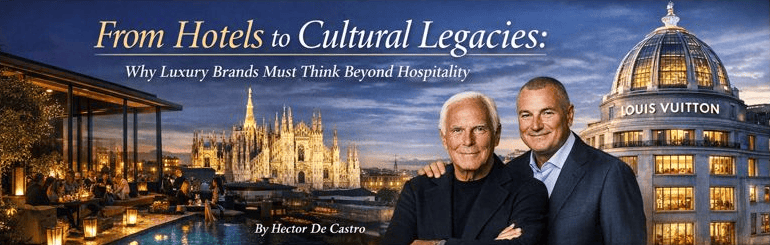 Armani. Versace. Bulgari. Louis Vuitton. Fendi.
Every major luxury house with more than a century of heritage is entering hospitality.
This is not a trend. It is a structural shift.
Armani. Versace. Bulgari. Louis Vuitton. Fendi.
Every major luxury house with more than a century of heritage is entering hospitality.
This is not a trend. It is a structural shift.
ARMANI, FENDI, LOUIS VUITTON, BULGARI, VERSACE.
Every major luxury house with more than a century of heritage is entering hospitality.
This is not a trend. It is a structural shift.
According to Statista and UN Tourism, global hospitality surpassed USD 4.7 trillion in total contribution to GDP in 2023, while the luxury hospitality segment alone is projected to exceed USD 154 billion by 2030, growing faster than conventional upscale travel. At the same time, branded residences expanded by more than 230% globally between 2013 and 2023 (Savills Global Branded Residences Report), making hospitality the new frontier of luxury real estate, lifestyle, and identity.
Yet despite the capital, the architects, and the brands, most luxury-branded hotels will underperform or quietly disappear within two decades.
Not because they lack money.
Not because they lack design.
But because they are building hotels when they should be building cultural empires.
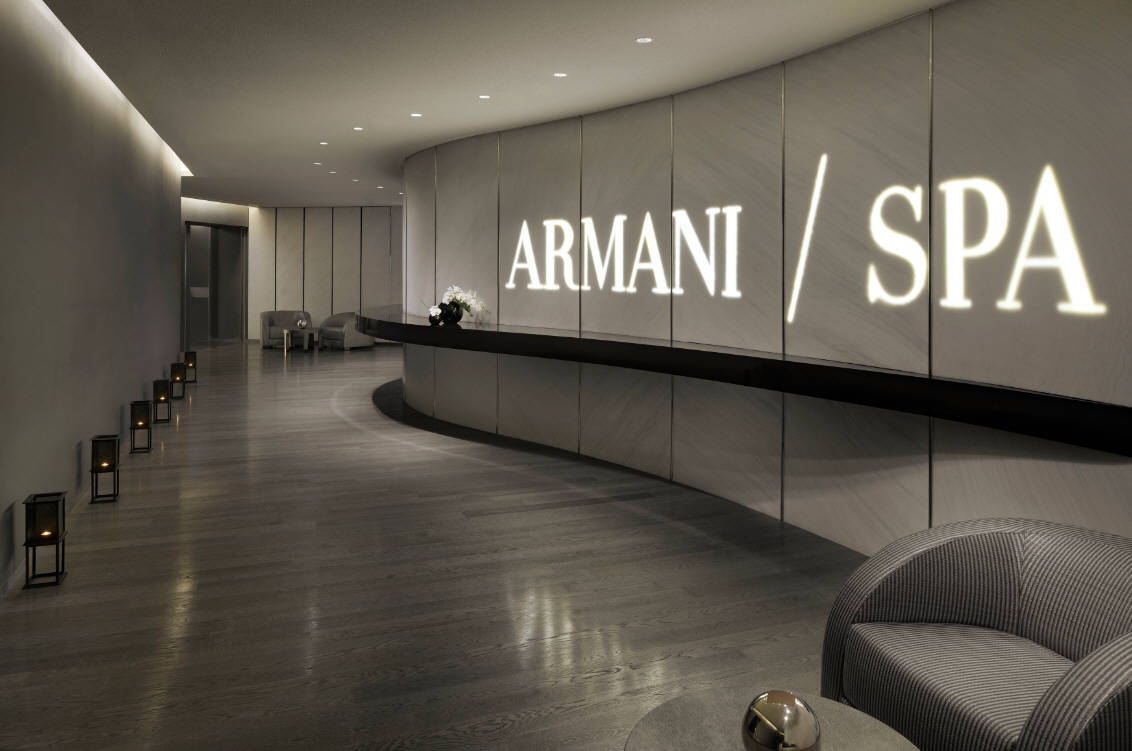
Armani hotel, Dubai
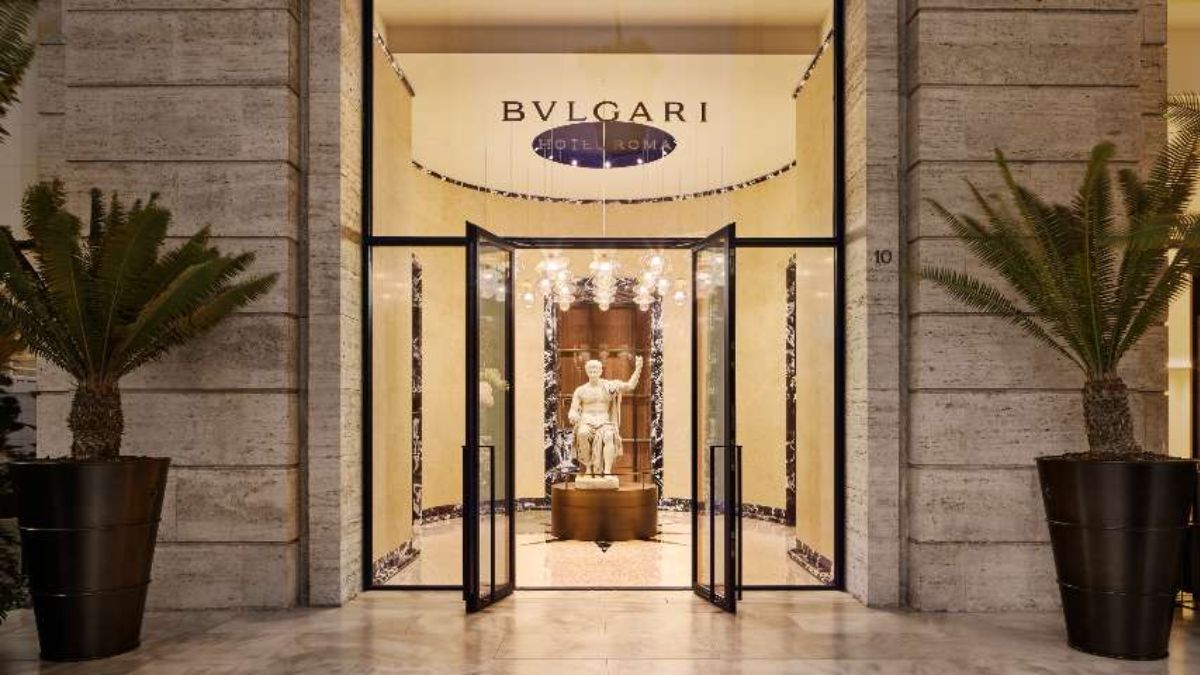
Many luxury brands still follow a fragile formula:
-Acquire or license a property.
-Apply the brand aesthetics.
– Assume loyalty will follow.
This approach produces visibility — but rarely legacy.
– A logo on a façade does not create meaning.
– A marble lobby does not create belonging.
– A Michelin-starred restaurant does not create memory on its own.
As Bernard Arnault, Chairman and CEO of LVMH, once stated:
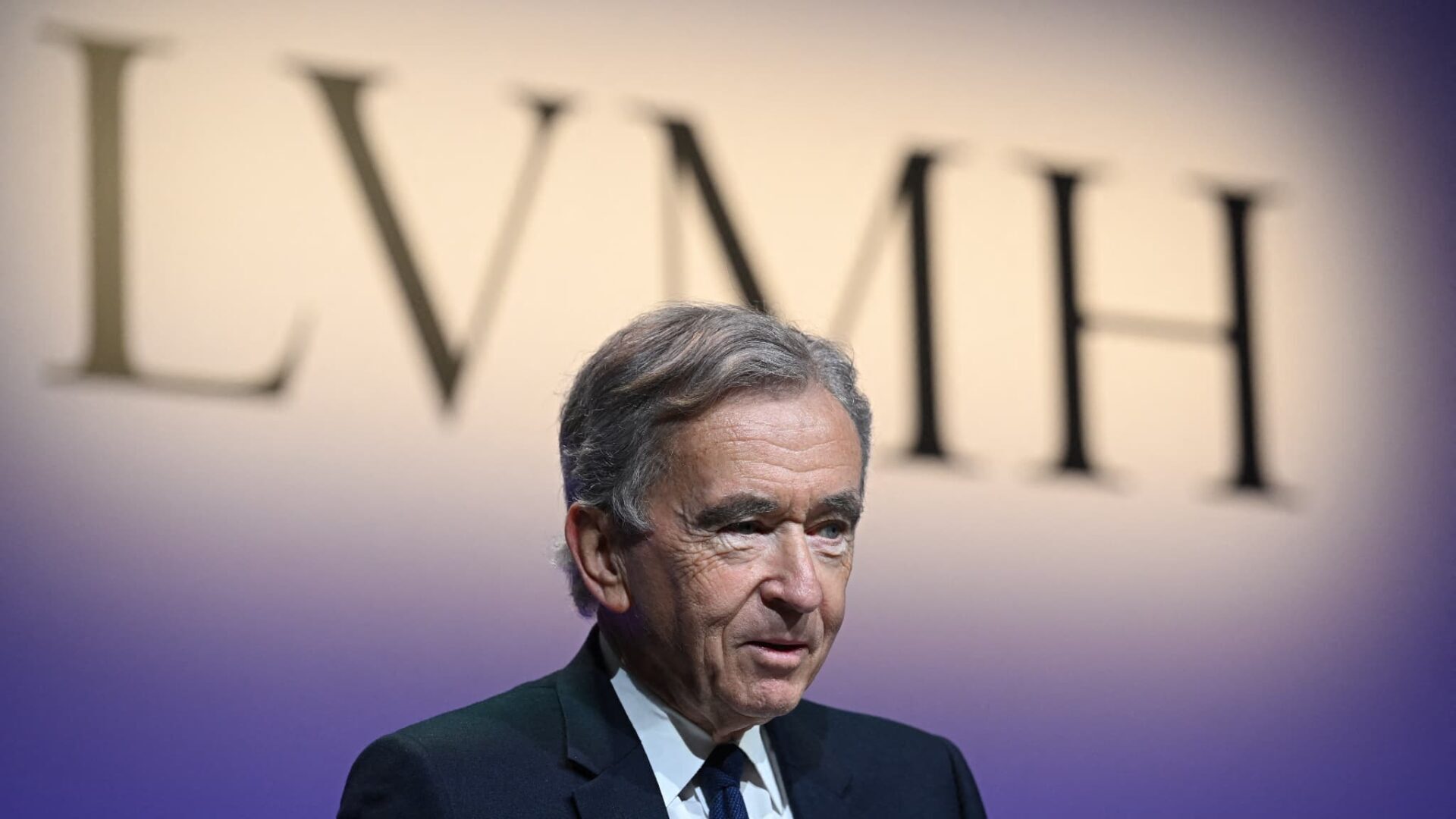
“Luxury is the ability to create desire where there was none before — and to sustain it over time.”
.
Desire sustained over time is not built through repetition.
It is built through culture.
With fewer than a dozen properties worldwide, Bulgari has never pursued scale. As Jean-Christophe Babin, CEO of Bulgari, explains:
“Bulgari Hotels are not about expansion. They are about expressing Roman and Italian craftsmanship at its highest level, in places that matter.”
Each property functions as a three-dimensional manifesto of Italian artistry, gastronomy, materials, and ritual. Guests do not simply stay — they enter Bulgari.
Giorgio Armani has always rejected excess. His hotels reflect this discipline. As Armani himself has said:
“Elegance is not about being noticed, it’s about being remembered.”
The Armani Hotels are not decorative extensions of fashion; they are spatial translations of a philosophy — restraint, precision, silence, and control.
When Louis Vuitton announced its Paris hospitality project planned for 2026, it was not framed as “another luxury hotel.” It was positioned as the materialization of a 150-year travel legacy.
Louis Vuitton does not sell rooms.
It sells the mythology of travel itself.
The rise of branded residences is not driven by real estate speculation alone. Savills identifies three core motivations:
In other words: ownership of beauty, meaning, and values has become the new status symbol.
This is why hospitality today sits at the intersection of culture, psychology, and long-term capital.
What most branded hospitality projects still lack is a living relationship with place.
True luxury in the 21st century must answer uncomfortable questions:
As the World Economic Forum (2024) notes:

“Future luxury consumers will reward brands that demonstrate measurable positive impact on ecosystems and communities, not symbolic sustainability claims.”
This is where hospitality is evolving from experience creation to regenerative stewardship — not as ideology, but as strategic necessity.
The future belongs to brands and developers who understand this distinction:
Hotels that succeed long-term will function as:
Not transient destinations, but institutions.
Luxury brands entering hospitality today carry unprecedented influence. With that influence comes responsibility.
Build for 100 years, not for exit strategies.
Seek cultural fusion, not licensing agreements.
Design with place, not on top of it.
The world does not need more branded hotels.
It needs fewer — and better — ones.
Places that outlive their creators.
Places that regenerate value instead of consuming it.
Places that transform hospitality into legacy.
And that, ultimately, is what separates a hotel from an empire.
Regenerative travel is emerging as one of the defining ideas shaping the future of tourism. Yet to understand its true...
Read more →
Strategic Alliance: Regenera Luxury x Ownia Collection, Regenera Luxury is proud to announce a strategic partnership with Ownia Collection, a...
Read more →
Europe’s sustainability framework is reshaping the future of hospitality. In 2026, luxury and boutique hotels can no longer rely on...
Read more →