


What Regenerative Travel Truly Means: From Intention to Verified Impact
Regenerative travel is emerging as one of the defining ideas shaping the future of tourism. Yet to understand its true...
Read more →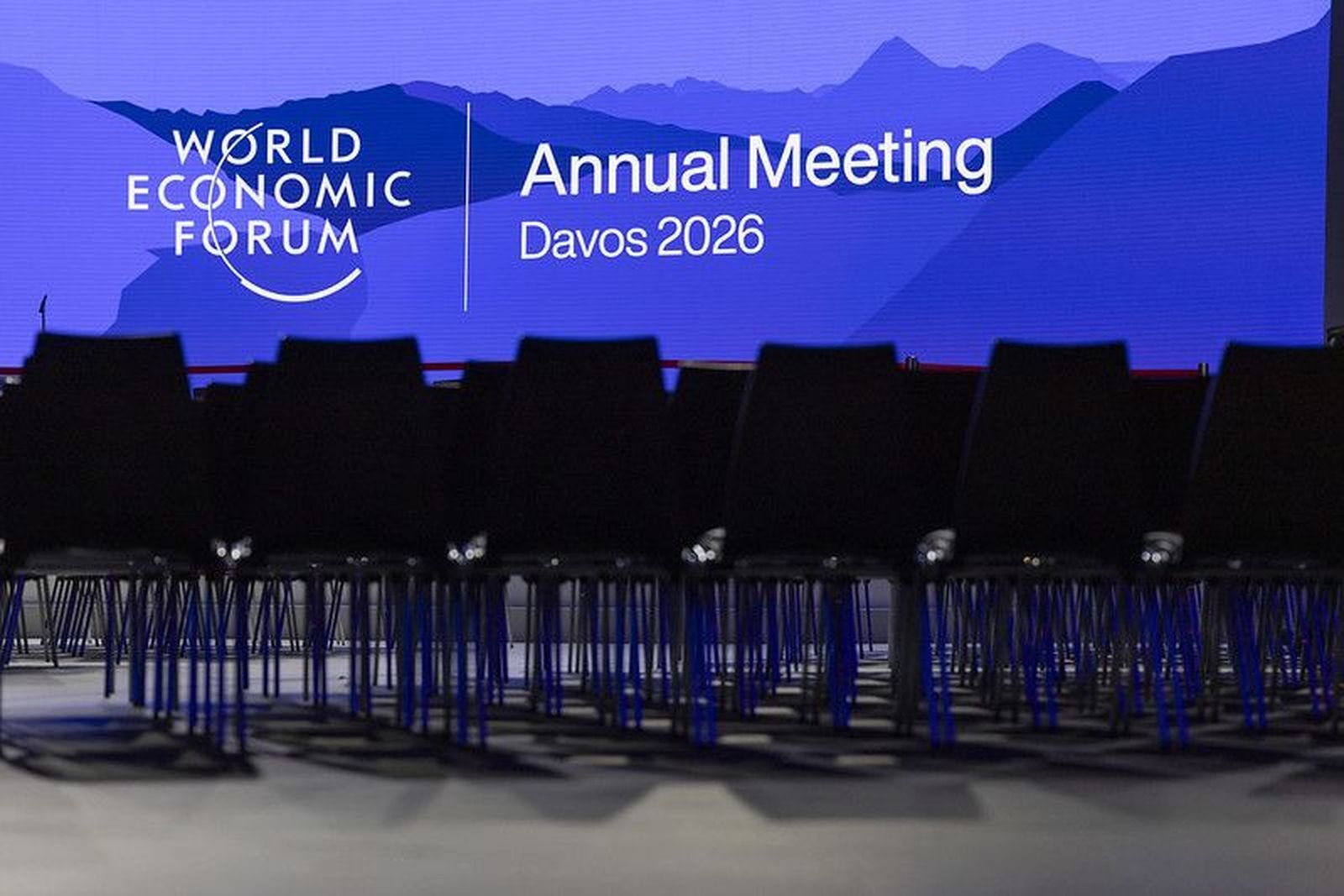
The World Economic Forum Annual Meeting 2026 (Davos-Klosters, 19–23 January 2026) convened under the theme “A Spirit of Dialogue”, bringing together close to 3,000 leaders from 130 countries amid what the Forum itself described as the most complex geopolitical backdrop in decades.
Yet, the dominant takeaway was not dialogue as a mood—it was fragmentation as a business condition. Multiple credible accounts described how U.S. President Donald Trump’s agenda repeatedly hijacked the week’s core discussions, reinforcing uncertainty for Europe and global markets.
For Regenera Luxury and the global luxury hotel sector, Davos 2026 is not “macro noise”. It is a direct signal that the winners of the next cycle will be properties and brands that can prove resilience, credibility, and net-positive place impact—with systems, metrics, and governance robust enough to hold in a more volatile world.

Across Davos, a shared diagnosis emerged: the prior “rules-based predictability” is weakening, replaced by a world of competing blocs, ad-hoc coalitions, and state intervention. In that environment, hospitality becomes a frontline industry because it sits at the intersection of:
Regenera Luxury lens: In an era of rupture, “sustainability” as a set of incremental efficiencies is no longer sufficient as a strategic posture. What markets reward is regeneration as capacity-building: hotels that strengthen the destination’s social, ecological, and economic resilience—thereby stabilizing their own operations.
A key Davos undercurrent was a reframing of sovereignty as capability (energy security, food security, technological capacity, and social stability) rather than isolation. This is highly relevant to luxury hospitality because guests, investors, and regulators increasingly evaluate whether a property can perform under stress.
Water security (non-negotiable)
Food security (strategic differentiation in luxury)
Energy stability (cost + continuity)
Community resilience (license to operate)
This is where Regenera Luxury can lead: by converting “values” into auditable operating capability.
The WEF white paper “Four Futures for the New Economy: Geoeconomics and Technology in 2030” (published 16 December 2025) outlines four scenarios for 2030 based on the interaction between geopolitical stability and technology adoption, explicitly linking these forces to labor market disruption and strategic uncertainty.
REGENERA LUXURY recommendation: deploy AI primarily to elevate service and resilience (forecasting, preventive maintenance, procurement risk, energy optimization), while investing in “regenerative roles” that strengthen community and culture (local experience curators, biodiversity stewards, culinary sourcing leads, wellbeing hosts). This is also where WELL-aligned workforce wellbeing becomes a performance driver rather than a compliance badge.
Davos amplified the perception that Europe must move faster and reduce bureaucratic drag. Concurrently, the EU is actively revising the scope of some corporate sustainability rules: Reuters reported a December 2025 deal and subsequent European Parliament approval to scale back parts of the EU’s corporate sustainability framework (notably around reporting/due diligence scope and thresholds).
However, it is a strategic mistake for hospitality to read this as “ESG is over”. Two reasons:
The EU’s maritime ETS phase-in increases the share of shipping emissions that must be covered: 70% in 2026 (for emissions reported in 2025) and 100% from 2027 onward—a lever that can translate into higher freight costs and stronger carbon transparency expectations.
REGENERA LUXURY position: The defensible approach is not “more reporting”. It is stronger claims integrity: evidence-backed statements, supply-chain controls, and measurable regeneration outcomes.
Davos highlighted growing demand for alternatives to binary geopolitics. In hospitality, the parallel is clear:
In a fractured world, the most future-proof luxury is:
That is the strategic space Regenera Luxury can own globally—provided it is expressed as a management system, not merely a narrative.
Regenerative performance index (link regeneration KPIs to GOP/RevPAR and risk reduction)
Geopolitical & supply-chain risk map (critical suppliers, substitutes, local redundancy)
Water security plan (reuse, harvesting, quality, basin partnerships, KPIs)
Energy resilience program (efficiency + demand management + clean generation)
Regenerative procurement contracts (multi-year; verification; community benefit)
Workforce architecture (skills academy; wellbeing; retention; leadership pipeline)
AI for resilience, not just cost (forecasting, maintenance, procurement, operations)
Stakeholder governance (standing forum, grievance process, co-designed projects)
Biodiversity as an asset class (habitat restoration metrics, species indicators)
Claims integrity protocol (what you can say, prove, and audit—across channels)
Regenerative travel is emerging as one of the defining ideas shaping the future of tourism. Yet to understand its true...
Read more →
Strategic Alliance: Regenera Luxury x Ownia Collection, Regenera Luxury is proud to announce a strategic partnership with Ownia Collection, a...
Read more →
Europe’s sustainability framework is reshaping the future of hospitality. In 2026, luxury and boutique hotels can no longer rely on...
Read more →